
Last updated November 16, 2026
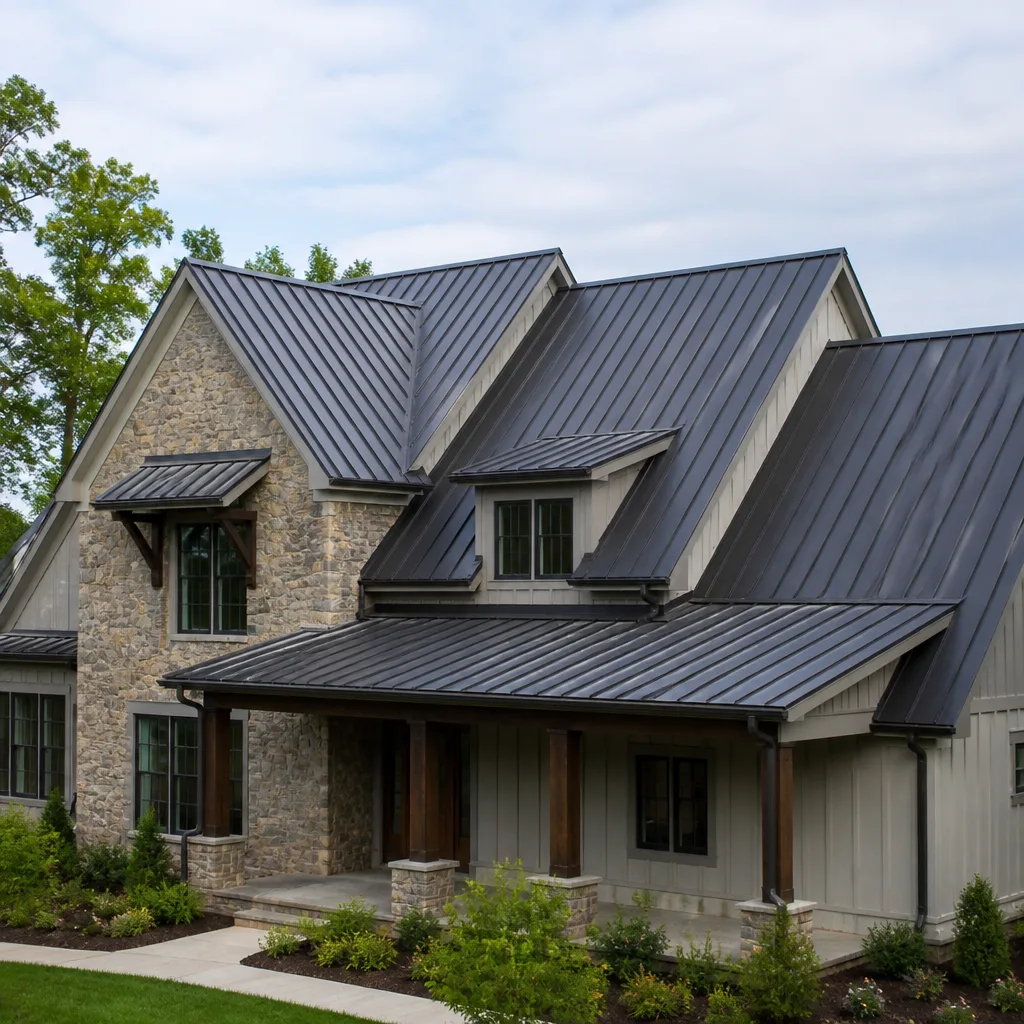 Metal roofing
 Architectural shingles
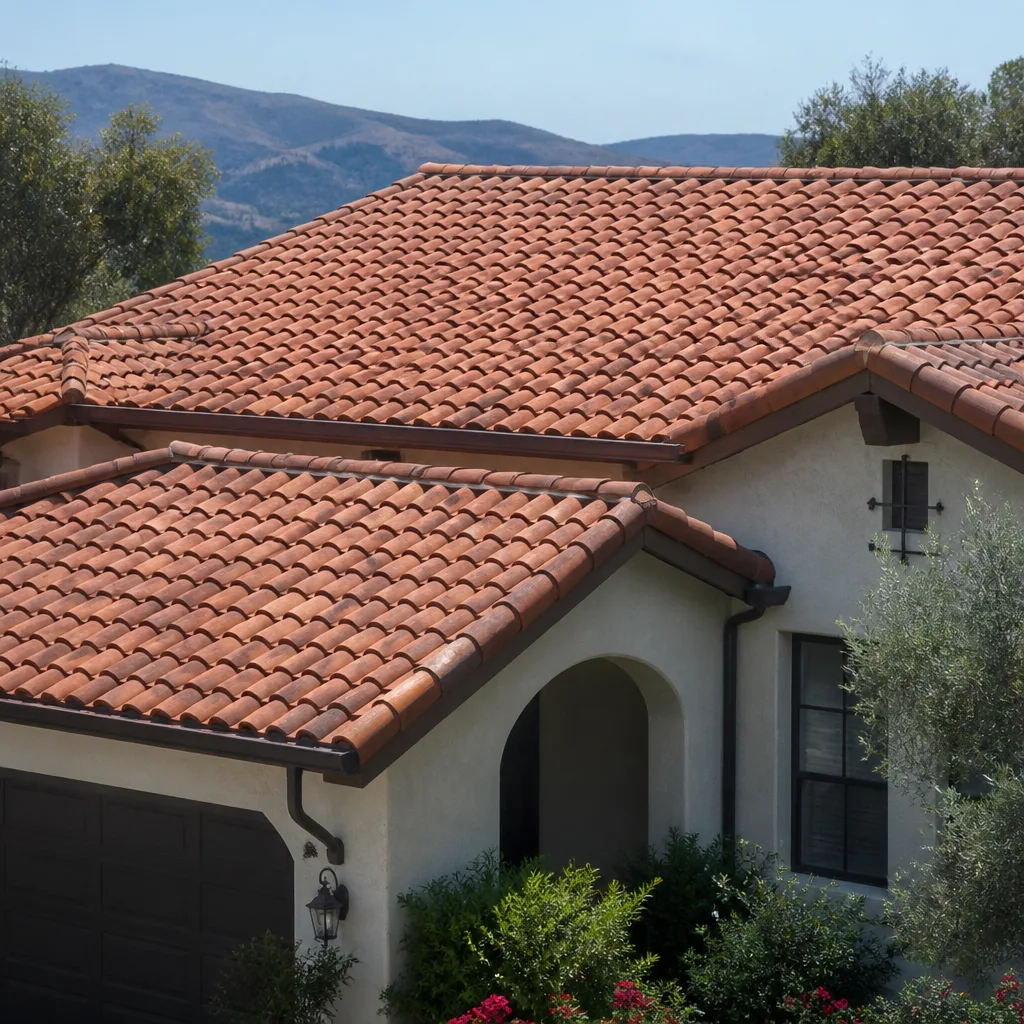 Tile roofing
 GAF
 Owens Corning
 Flat & low-slope
Free roof inspection with deck photos before we talk money - GAF and Owens Corning certified installation
Roofing Warning Signs: A Henderson Homeowner’s Reference Guide
Most roofing warning-sign guides are written for wet climates. They tell you to watch for moss, for dark water stains spreading across the ceiling, for gutters sagging under the weight of wet leaves. Those signals matter here too, but they arrive late. In Henderson, a roof can be losing its structure for a long time without a single drop showing up inside the house. Thermal cracking, granule loss, and quiet ventilation failure do their work in the heat and dry air first, and by the time a brown ring appears on your ceiling, the damage underneath it has had years to spread. This guide covers the earlier, subtler signals specific to desert-climate homes, so you can tell a repair from a replacement before the decision gets made for you. Delmar Roof Repair works on roofs across Henderson, and we’ve walked plenty of these.
Quick Answer
The most important early warning signs on a Henderson roof are accelerated granule loss (check gutters and downspouts, not just the shingles), thermal cracking along shingle edges, seasonal movement at flashing points around chimneys and HVAC penetrations, and rising attic heat or HVAC inefficiency long before a leak appears. Catching these early is usually the difference between a targeted repair and a full roofing replacement.
Styles & brands we work with
- Architectural shingles
- Metal roofing
- Tile roofing
- GAF
- Owens Corning
- Flat & low-slope
Table of Contents
- Accelerated Granule Loss: The First Sign Most Homeowners Miss
- Thermal Cracking vs. Impact Cracking
- Interior Warnings Unique to Desert Homes
- Flashing Failure and Henderson’s Temperature Swings
- Cosmetic Staining vs. Structural Warning Signs
- What Roof Age and Shape Tell You (and What They Don’t)
- A Step-by-Step Homeowner Inspection Walkthrough
- When to Call a Professional
Accelerated Granule Loss: The First Sign Most Homeowners Miss
Granules are the protective mineral layer pressed into asphalt shingles. They shield the asphalt underneath from UV light, which in Henderson is intense year-round. When granules wear away faster than they should, the shingle beneath starts to dry, crack, and lose its ability to keep water out. The problem is that granule loss is quiet. It doesn’t announce itself on the roof’s surface the way a missing shingle does. It shows up in the places granules get washed and blown.
Here’s where to actually look:
- Gutter troughs: A light scattering of granules is normal on a new roof. A visible, gritty accumulation in the bottom of the gutter after a dry stretch, or black grit collecting at the downspout outlet, is a sign the shingles are shedding faster than they should.
- Downspout splash zones: Look at what collects at the base of the downspout after rain. Black sand-like grit that keeps coming back is worth noting.
- Shingle surface texture: Run your eye along a south- or west-facing slope in the afternoon. The shingles should look uniformly grainy. Bald patches, especially near ridges or in corners where heat concentrates, mean the asphalt is exposed.
- Dark shingle color under summer sun: If you can see the shingle’s base color through the granule layer in patches, the protection is thinning. This is common on the sun-facing slopes of homes in Green Valley and Anthem, where the sun hits hardest.
Why it matters: accelerated granule loss on a Henderson roof often signals the shingle is past its service life even if it’s not visibly bare everywhere yet. The asphalt has begun to dry out from the sun. Catching the granular loss before the shingle cracks lets us plan a targeted repair or partial replacement of the affected slope, instead of a full roofing replacement once the whole surface fails.
It’s the kind of thing our technicians have up to 10 years of experience spotting. They know what a normal scatter looks like versus real shedding.
Thermal Cracking vs. Impact Cracking
Henderson’s temperature swings are real, and they do more to a roof than people realize. A summer day can hit triple digits, and night temperatures can drop sharply. Every shingle expands slightly with the heat and contracts with the cool. After enough cycles, the shingles can develop cracks. That’s thermal cracking, and it looks different from the damage caused by something falling on the roof.
Here’s how to tell them apart:
- Thermal cracking typically shows up as straight or slightly wandering lines that run across a shingle, often perpendicular to the shingle’s length. It tends to appear first in the areas that heat up most: south and west-facing slopes, near ridge lines, and along wall flashing where heat builds up. The cracks often run along the edges of individual shingles.
- Impact cracking usually starts at a point and radiates outward like a spiderweb or a star. It clusters around the center of impact, and you may see a small dent or divot at the center. This is the pattern left by something hitting the roof.
Why the distinction matters: thermal cracking is wear-and-tear caused by the climate, and it’s generally treated as maintenance. Impact cracking is often treated differently by insurance adjusters because it can indicate a specific event. If you have a claim in play, being able to point at the pattern and describe it accurately is worth something. It also changes the repair: thermal cracking along a slope often means the shingle system is aging and needs more than a spot patch, while a localized impact crack can sometimes be handled with a targeted repair on the affected shingles.
If you’re not sure which pattern you’re looking at, that’s the point at which an inspection beats a guess. We inspect before we recommend, and the pattern is one of the first things we look at.
Interior Warnings Unique to Desert Homes
In wet climates, the first interior sign of a roof problem is usually water: a stain, a drip, a discolored ceiling. In Henderson, the roof can fail structurally long before water gets inside. The signs show up in comfort and efficiency first.
Two things to watch for that often precede visible roof failure by a year or two:
- Unexplained HVAC inefficiency. If your cooling bills creep up without a clear cause, or a room stays warm no matter what the thermostat says, check the attic before you blame the air conditioner. A failing attic ventilation system lets heat build up under the roof deck. That heat radiates down through the insulation and loads the HVAC system, which then works harder to keep up. Ventilation failure is a roof-deck issue, and it’s a warning sign that your roof assembly isn’t performing the way it should.
- Hot attic floors. If the floor of the attic or the tops of the ceiling joists feel noticeably hot to the touch on a summer day, even with the attic door open, that’s a sign the roof area is trapping heat rather than releasing it. It often points to blocked or failed vents, or a ventilation setup that was never sized right for the house.
Why this matters in Henderson specifically: our climate lets a roof get hot enough that ventilation problems show up first as energy bills and uncomfortable rooms, not as leaks. By the time a leak appears, the decking and insulation may already be compromised. If you’ve noticed the efficiency drifting, an inspection is the least expensive way to rule the roof in or out. Homes in older Henderson neighborhoods with retrofitted attic systems are especially worth checking.
We don’t sell HVAC work. Our scope is roof inspection, roof repair, and roof replacement. When we inspect, the attic ventilation and deck condition are part of what we look at, because they’re part of the roof system.
Flashing Failure and Henderson’s Temperature Swings
Flashing is the metal (or sometimes a membrane) that seals the joints where your roof meets something else: a chimney base, a skylight, a furnace or HVAC penetration, a wall. It’s the most common leak point on any roof, and it’s especially vulnerable in a climate with big seasonal temperature swings. Metal expands when it’s hot and contracts when it’s cool. Over enough cycles, the sealant at the flashing edges can pull loose, the flashing can lift slightly, and a gap opens up.
In Henderson, the thermal movement is real enough that flashing is one of the first places we look on a roof that’s been through a few summers. What to watch for:
- Gaps at chimney bases: Look at the seal where the flashing meets the chimney. A visible gap, peeling sealant, or flashing that’s pulling away from the masonry is a warning.
- Skylight edges: The seal around a skylight is a joint that moves. If you see cracked caulk or lifted flashing at the edges, water has an entry point.
- HVAC penetrations: The boot or collar where an HVAC line comes through the roof can crack as it ages. It’s a small, easily missed joint that fails quietly.
- Wall intersections: Where the roof meets a vertical wall, step flashing should be stepped and sealed. If the sealant has cracked or the flashing has lifted, that’s a point of entry.
Flashing failure doesn’t always leak right away. The gap can sit there through dry seasons and open up when the first storm hits. Catching it during a dry-season inspection lets us reseal or replace the flashing before it finds a path inside. That’s the repair-first approach: fix the joint while it’s a joint problem, rather than waiting for it to become a decking and insulation problem.
Cosmetic Staining vs. Structural Warning Signs
After monsoon season, it’s common to see dark streaks or staining on shingles. Homeowners often assume the worst, and we understand why. Not all of it is serious. Some of it is cosmetic, and some of it is the roof telling you something structural.
Here’s the difference:
- Cosmetic staining often shows up as dark streaking that runs down a slope, usually on shaded or north-facing areas, and often after humid weather. It can be algae growth or airborne debris that’s settled and darkened. It’s a surface issue. It can make a roof look old before it is, but it doesn’t necessarily mean the shingle is failing.
- Structural warning signs are about the shingle’s integrity: granules missing in patches, cracks, lifting or curling edges, visible decking movement, or soft spots you can feel or see as a dip. These point at the shingle or the deck, not the surface.
Why Henderson homeowners confuse them: monsoon season pushes humidity up, and staining moves in fast, so it looks alarming. At the same time, the sun damage that actually ages a roof is easy to overlook because it’s gradual. The test isn’t “does the roof look dark,” it’s “is the shingle still intact?” An inspection answers that question directly.
If staining is cosmetic, we’ll tell you. Repair when possible, replace when necessary. We’d rather you understand what you have than pay for roof replacement you didn’t need.
What Roof Age and Shape Tell You (and What They Don’t)
Roof age is useful context, but it’s not a diagnosis. A shingle on a well-ventilated, properly installed roof can last far longer than the same shingle on a poorly ventilated roof in a hotter spot. In Henderson, the sun-facing slope of a home can age noticeably faster than the shaded slope, so “the roof is 12 years old” tells you less than “the south slope is showing granule loss.”
Roof shape matters too. A simple gable roof sheds water and heat more predictably than a complex roof with multiple valleys, dormers, and penetrations. Every valley and every penetration is a joint, and joints are where flashing fails. On a complex roof in Henderson, the inspection should spend most of its time at the joints, not just the open slopes.
What age won’t tell you:
- Whether the decking under the shingles is sound.
- Whether ventilation is working.
- Whether the flashing is sealed.
- Which slope is failing first.
That’s why we offer standalone roof inspections. A homeowner can get an honest diagnosis before any repair or replacement decision is made. You’re not required to commit to work to get the assessment. The inspection is the starting point, and it’s the natural first step, not an upsell.
We work with shingles from GAF, CertainTeed, Owens Corning, IKO, Atlas, Tamko, and Boral. Match any shingle, fix any system. That breadth matters at the inspection stage because it means the recommendation follows what the roof actually needs, rather than being steered by whichever brand a contractor happens to carry.
A Step-by-Step Homeowner Inspection Walkthrough
You can’t safely get up on the roof to do a full inspection yourself, and we don’t recommend it. Height work and hot shingles are a bad combination. But you can do a ground-level and interior walkthrough that tells you whether to call for a professional inspection. Here’s a sequence that covers the essentials.
- Walk the perimeter in late afternoon. Walk the perimeter of the house from the ground and look up at the roof slopes. Look for bald patches, curled edges, and anything that looks lifted. The afternoon light rakes across the surface and makes texture differences easier to see.
- Check the gutters and downspouts. Look in the gutters for grit accumulation. Look at the ground under the downspouts for granular buildup. Note whether it’s a light scatter or a steady accumulation.
- Look at the flashing joints from the ground as best you can. Check the chimney base, the skylight edges, and any HVAC penetration for visible gaps, cracked sealant, or flashing that’s pulled away.
- Go into the attic with a flashlight. Look at the underside of the roof deck for daylight showing through, for discoloration, or for decking that looks stained or soft. Note whether the attic feels oppressively hot and whether the vents look clear.
- Note interior comfort issues. Write down any room that stays hot, any rise in cooling bills, and any ceiling discoloration, even faint. These are pattern clues.
- Look at the shingle color and texture along the sun-facing slopes first. South and west slopes take the most heat. That’s where granule loss and thermal cracking show first. If those slopes look worse than the shaded sides, that’s a finding.
- Write down what you found and where. A simple list of observations, with locations, is worth bringing to an inspection. It turns “something feels off” into a specific question.
This walkthrough is about spotting signals, not diagnosing them. When you’re ready for the diagnosis, an inspection from a roofing specialist is the next step.
If the inspection shows fixable damage, we handle the roof repair in Henderson. If the roof is at the end of its service life, we’ll talk through roof replacement with a written, line-item scope so you can see exactly what’s being done. Either way, one company handles inspection, repair, and replacement, so you don’t have to re-vet contractors if the situation changes.
Common Mistakes to Avoid
- Waiting for a water stain before taking the roof seriously. In Henderson, the interior stain is often the late sign, not the early one. Watch granule loss and attic heat first.
- Assuming dark streaking means the roof is finished. Post-monsoon staining is often cosmetic. The structural signs are about shingle integrity, not surface color.
- Choosing a repair based on the price alone. A cheap patch on a slope that’s aging out just postpones the real repair. Match the repair to what the shingle is actually showing.
- Letting a contractor quote replacement before anyone has inspected. A scope that’s set without climbing up and looking is a guess. The inspection should come first.
- Ignoring ventilation because the roof doesn’t leak. Ventilation failure in Henderson drives energy costs and accelerates shingle wear. It’s part of the roof, not an HVAC-only issue.
- Confusing thermal cracking with impact damage when filing a claim. The pattern matters. Photograph it and describe it accurately before you decide how to proceed.
- Canceling or skipping a scheduled inspection after a dry spell. Dry weather is when a flashing gap or a thin patch is easiest to find and fix. Waiting for the next storm just means discovering it later.
See the difference
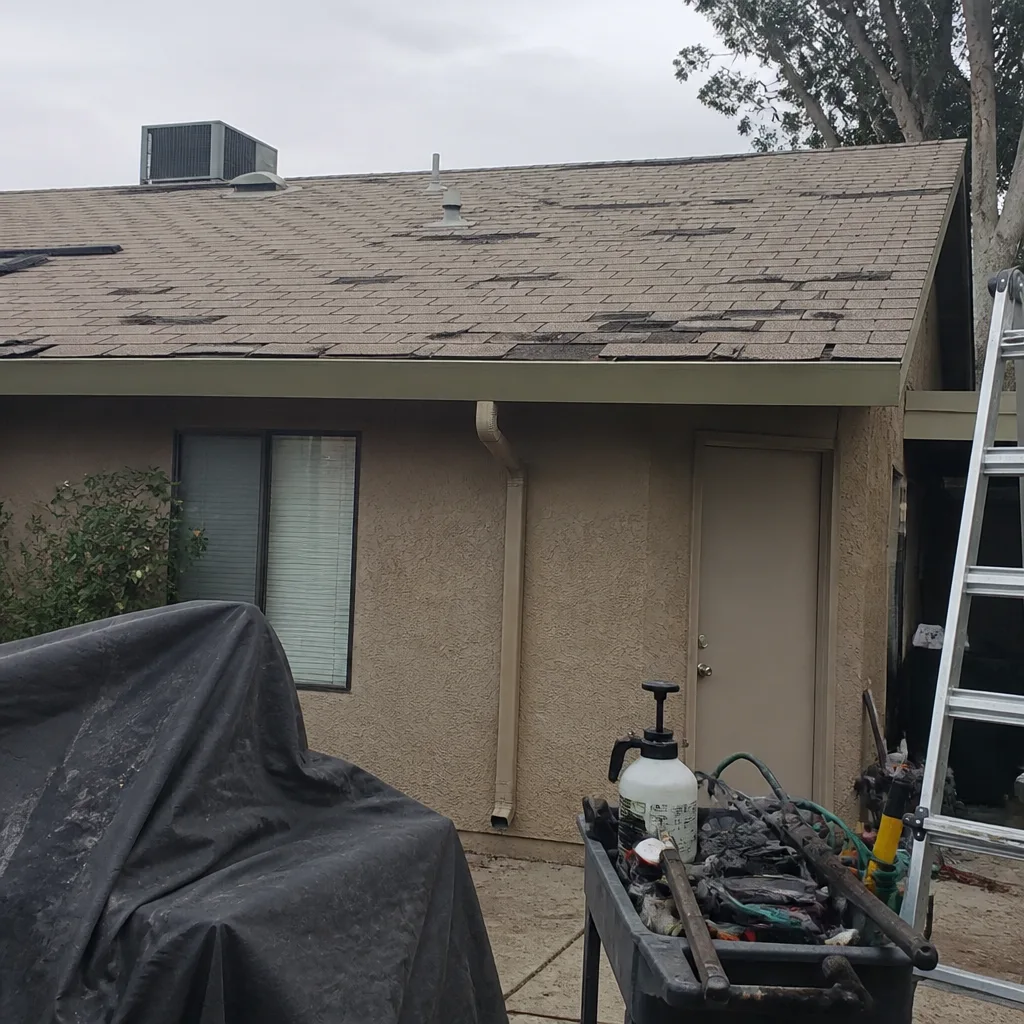 Before
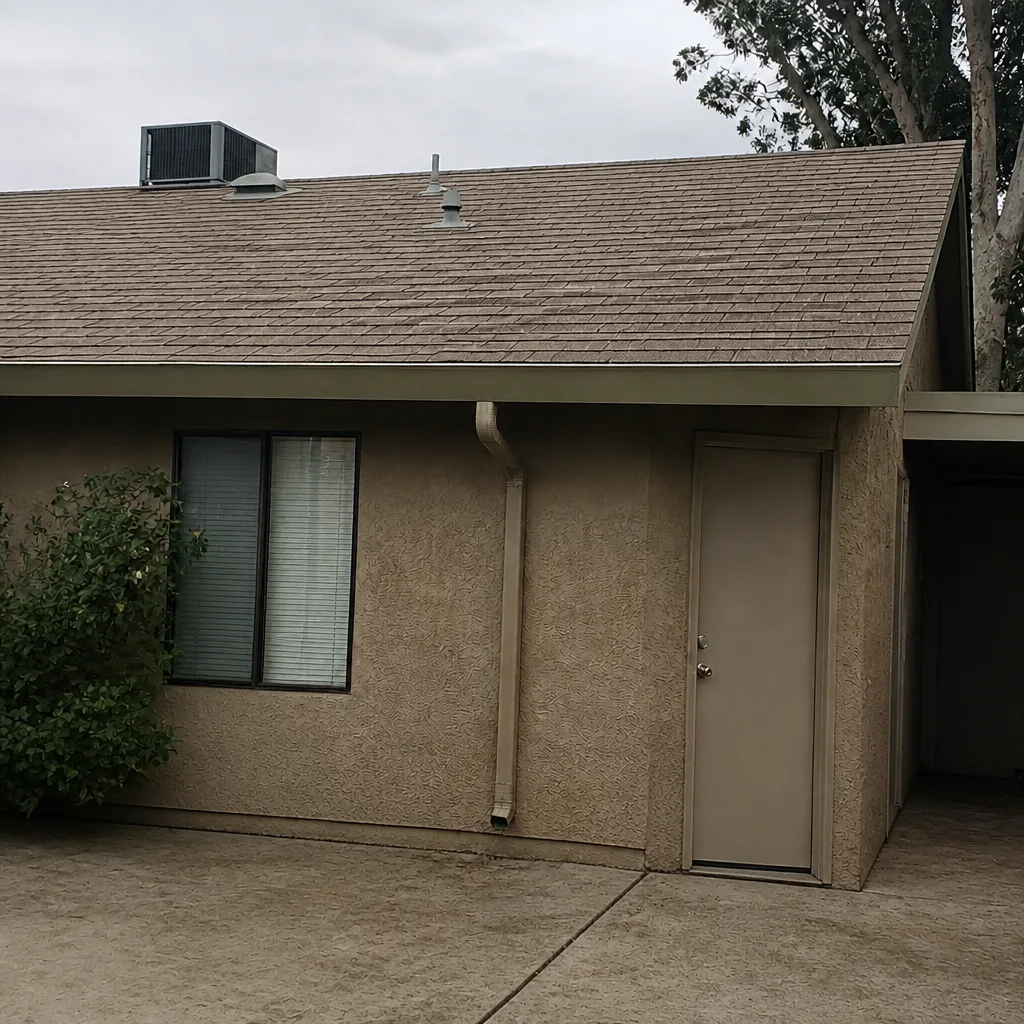 After
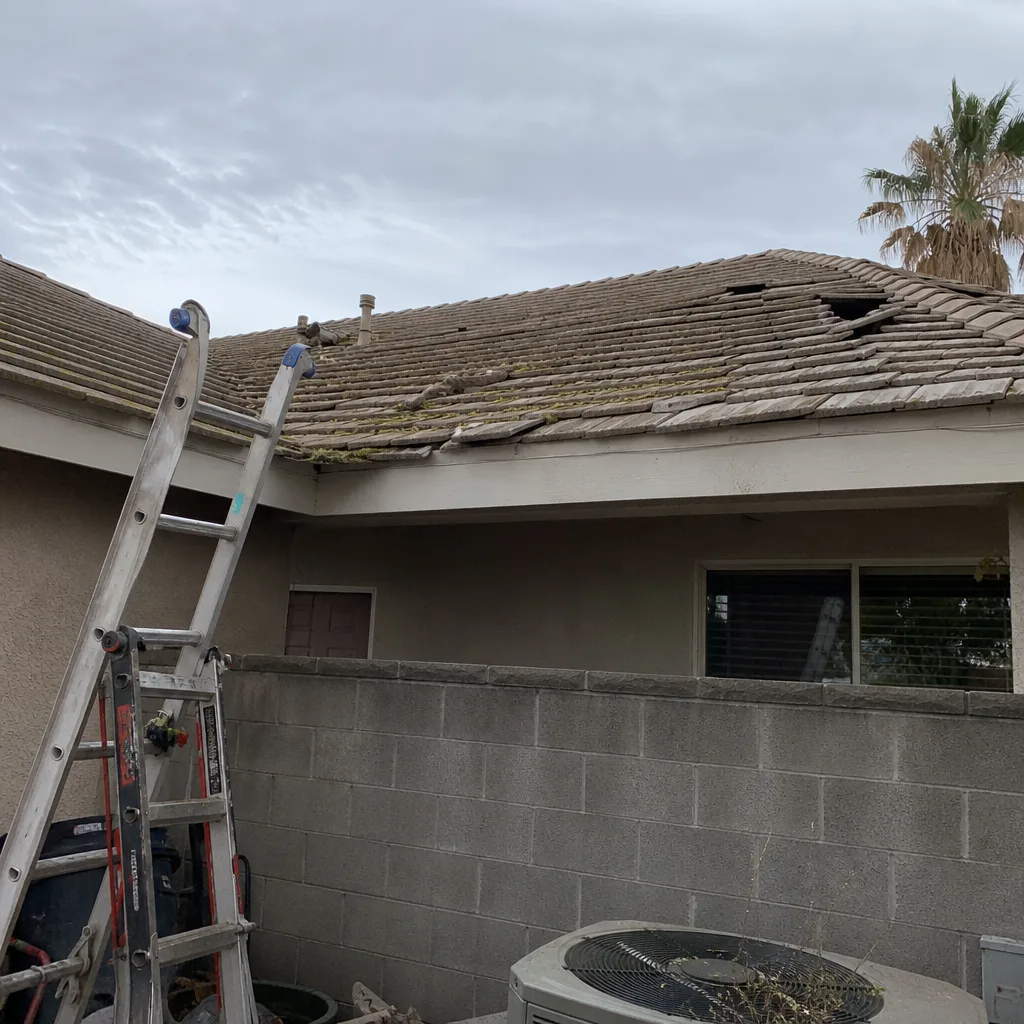 Before
 After
 Before
 After
When to Call a Professional
Call a roofing professional when you notice balanced or advancing granule loss, cracks spreading across a slope, visible gaps at flashing, a hot attic that isn’t explained by the weather, or any interior discoloration. Call immediately if a gap at a chimney or skylight is clearly open and exposed. Also call if your shingles are curling, if the deck feels soft, or if you’ve had a roof for a good stretch of years and can’t remember the last inspection. Those aren’t DIY problems, and diagnosing them from the ground is guesswork. The roof system is a set of connected assemblies: shingles, flashing, decking, ventilation. A proper inspection looks at all of them.
Delmar Roof Repair offers free estimates in Henderson. Call (833) 519-6453 to schedule your free estimate. We answer 24/7. Fast dispatch from 7am to 7pm, Sunday through Friday.
Frequently Asked Questions
The first signs are usually granule loss in gutters and downspouts, thermal cracking on sun-facing slopes, and ventilation problems that show up as a hot attic or rising cooling bills. Water stains on the ceiling tend to come later in desert climates, often after the shingle and deck have already been compromised. Call (833) 519-6453 if you notice these early signals. Estimates are free.
Thermal cracking usually shows as straight or wandering lines across a shingle, often perpendicular to its length, and it starts on the hottest slopes. Impact cracking usually radiates outward from a central point like a star and may leave a small dent at the center. The pattern matters for how the repair is scoped and for how an insurance adjuster may view it. Call (833) 519-6453 if you can’t tell the difference. An inspection settles it.
Often it’s cosmetic, especially if it’s a surface streaking that appeared after humid weather. It becomes a problem when the shingle itself is showing loss of granules, cracking, or lifted edges. The test isn’t the color; it’s whether the shingle is still intact. Call (833) 519-6453 for a free estimate and a straight answer on which one you’re seeing.
A hot attic often points to ventilation that isn’t moving heat out of the roof assembly, or to a deck issue that’s trapping heat. In Henderson’s heat, that shows up first as higher cooling bills and warm rooms, sometimes a year or two before a visible leak. It’s worth checking as part of a roof inspection. Call (833) 519-6453 to get it looked at.
No. The written, line-item estimate sets the final price, and we don’t add change orders once the work is underway. The scope is agreed in writing before any repair or replacement begins, based on what the inspection finds. Call (833) 519-6453 to schedule your free estimate.
It depends on the shingle, the slope, the ventilation, and the sun exposure. A well-ventilated roof with properly installed shingles lasts longer than the same shingle on a poorly ventilated roof in a hotter spot. Age is context; the condition is the diagnosis. Call (833) 519-6453 for an inspection if you’re not sure where your roof stands.
The Bottom Line
In Henderson, the warning signs that matter most are the quiet ones: granule loss in the gutters, thermal cracking on the slopes that take the most sun, flashing joints opening up with seasonal temperature swings, and ventilation problems that show up as hot attics and higher cooling bills. Water stains are a late signal, not an early one. Catching these early is usually the difference between a targeted repair and a full replacement, and the only way to know which you’re facing is a proper inspection. We inspect before we recommend. We repair when possible and replace when necessary. If you’ve spotted anything in this guide, the next step is simple.
Call (833) 519-6453 for a free estimate. We answer 24/7. Fast dispatch from 7am to 7pm, Sunday through Friday. Delmar Roof Repair provides roof inspection, roof repair, and roof replacement for homeowners across Henderson, working with shingles from GAF, CertainTeed, Owens Corning, IKO, Atlas, Tamko, and Boral, so we can match your existing system rather than force a brand switch. Our technicians have up to 10 years of experience. Seven brands, one honest assessment. Learn more about Delmar Roof Repair and how we work.
Written by the team at Delmar Roof Repair.