
Last updated November 16, 2026
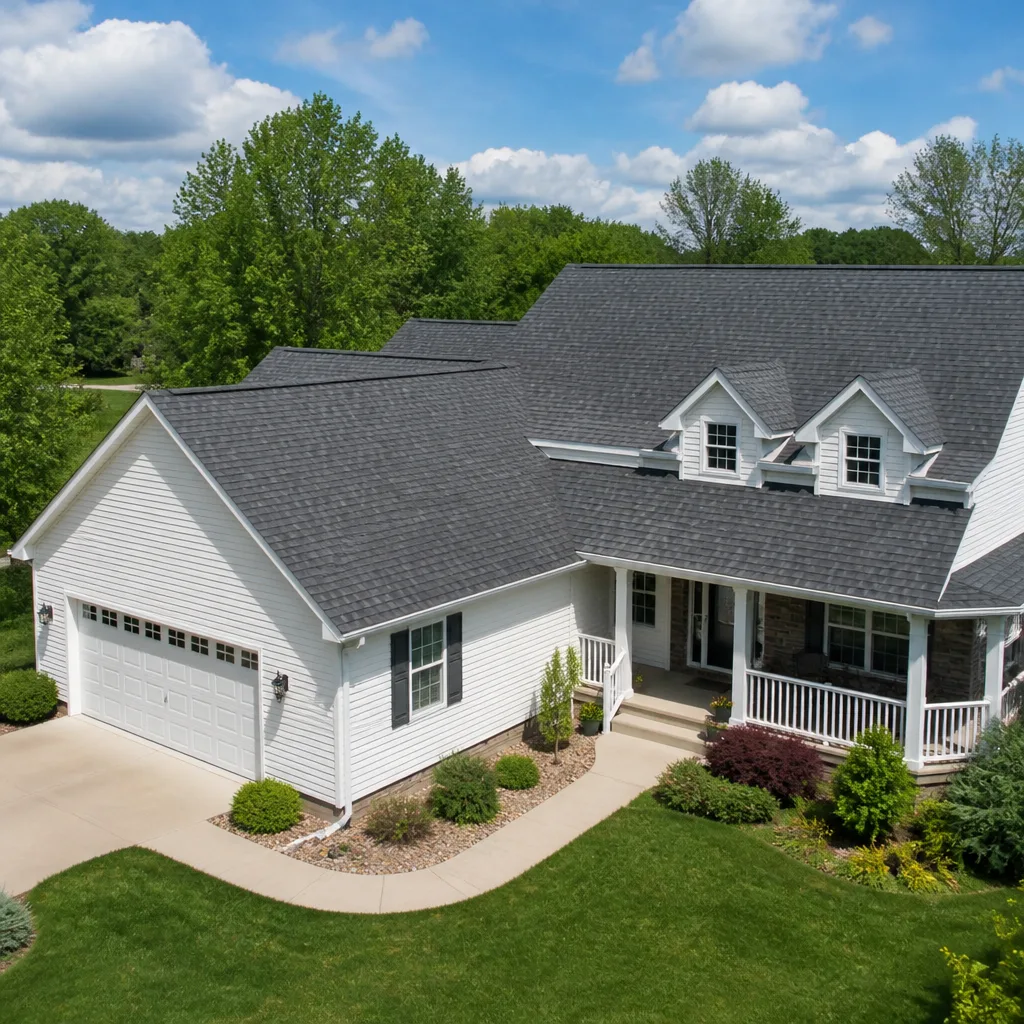
 Architectural shingles
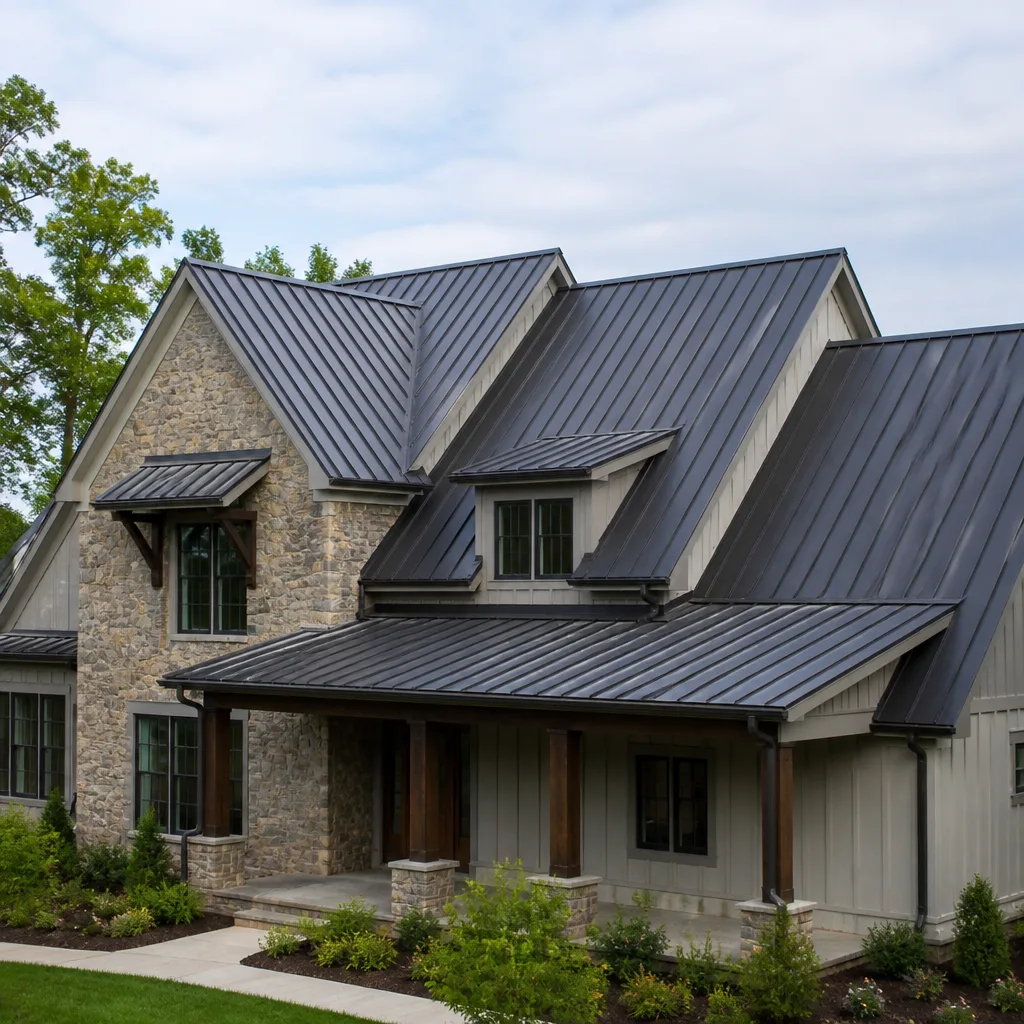 Metal roofing
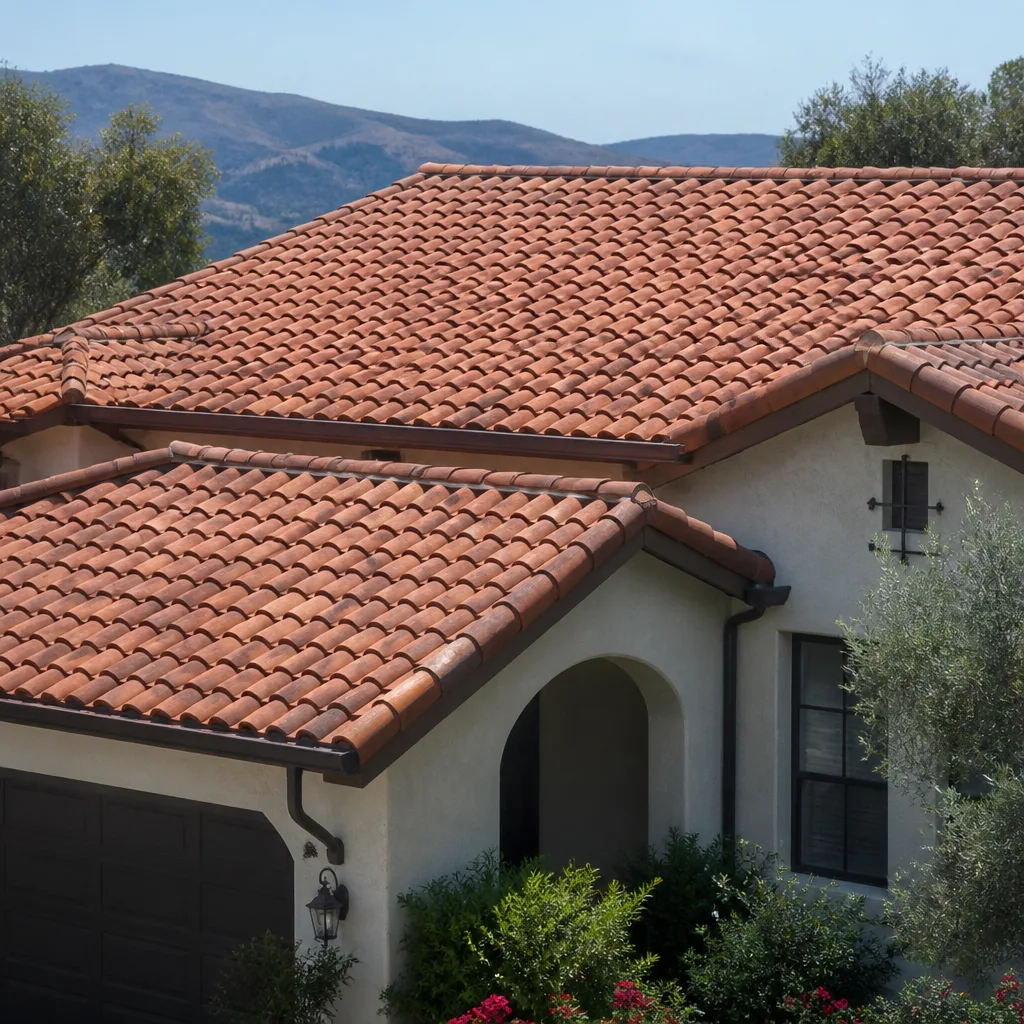 Tile roofing
 GAF
 Owens Corning
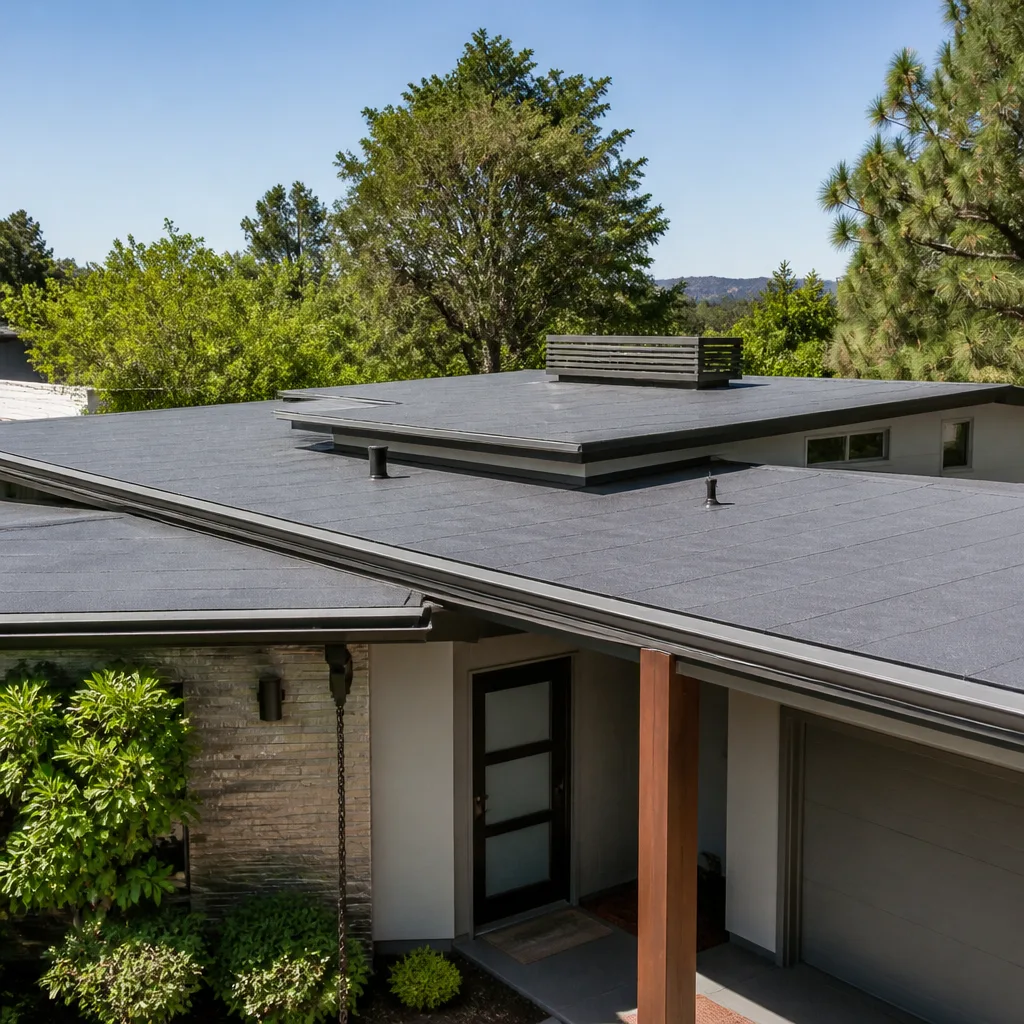 Flat & low-slope
Free roof inspection with deck photos before we talk money - GAF and Owens Corning certified installation
Roof Repair Troubleshooting in Henderson: Common Problems and How to Fix Them
A water stain on your ceiling almost never marks the spot where your roof is failing. Water travels along rafters and sheathing before it drips, sometimes moving four feet or more from the actual breach. That one fact changes how you should describe your problem to any roofer you call. If you point at the stain and say “fix that,” you may pay for a repair that never touches the real source. This guide teaches the upstream diagnostic logic roofers use, so you can identify what’s actually happening, describe it accurately, and judge whether the estimate you’re handed makes sense for a Henderson roof.
Quick Answer
Most roof problems in Henderson trace back to a failure two to six feet away from where the damage shows up inside the house. The fix is to work backward from the interior symptom to the roof surface above it, then check the three usual suspects in order: flashing, shingle condition, and drainage. A proper diagnosis comes before any repair decision, and a standalone inspection is the cleanest way to get one.
Styles & brands we work with
- Architectural shingles
- Metal roofing
- Tile roofing
- GAF
- Owens Corning
- Flat & low-slope
Table of Contents
- The Roof-to-Interior Mapping Method
- Henderson Failure Patterns by Roof Age
- Flashing vs. Shingle Failures: Telling Them Apart
- The Granule Loss Diagnostic
- What Ponding on a Flat Roof Really Means
- How Henderson Heat Changes the Rules
- What You Can Safely Check Yourself
- Common Mistakes to Avoid
- When to Call a Professional
The Roof-to-Interior Mapping Method
The stain on your ceiling is a destination, not an origin. Water enters at a breach on the roof, then follows the path of least resistance: down a rafter, along the underside of sheathing, across a top plate, and finally through the drywall where you see it. In a single-story Henderson home with a low-slope or shallow-pitch roof, that travel distance can run four feet or more. On steeper pitches, it’s often shorter but no more predictable.
Here’s how to work backward from the damage to the likely breach zone:
- Mark the stain’s position precisely. Go into the attic, or measure from an exterior wall to the stain, and note the distance. Then measure the same distance from the same wall on the roof above.
- Look uphill, not straight up. Water runs downhill but it enters along a seam or penetration, then may travel sideways. Search the roof surface uphill and laterally from the point above the stain.
- Check the nearest penetrations first. Vents, pipe boots, and chimney or skylight flashing sit in the top three causes of interior leaks. If one is within six feet of your mapped point, start there.
- Inspect the nearest valley and step flashing. Roof-to-wall intersections and valleys concentrate water. A tiny opening there lets in more water than a missing shingle on a flat field.
- Trace the attic side last. Water stains on rafters and sheathing in the attic confirm the path and can narrow the search to a few square feet.
This method works because it treats the roof as a system rather than a surface. When a technician inspects, they’re following the same logic, just faster and with better tools. That’s why we inspect before we recommend: the diagnosis drives the repair, not the other way around. If your mapping points toward a general area but you can’t isolate the breach, a standalone Delmar Roof Repair inspection will find it without committing you to a scope of work.
Henderson Failure Patterns by Roof Age
Roofs age on a schedule here, and the schedule is shaped by sun, heat, and the wide temperature swings between a summer afternoon and a desert night. Knowing roughly how old your roof is tells you what’s most likely failing, which helps you describe the problem accurately and anticipate what a repair will involve.
Around 5 years: installation and penetration issues
A young roof that leaks is usually telling you about workmanship, not material wear. The usual suspects are pipe boots whose rubber collar has cracked in the UV, poorly sealed penetrations, and flashing that was never stepped correctly at a wall junction. These are repair jobs, not replacement conversations, and they’re the most common reason a homeowner calls us on a roof that should still be sound.
Around 10 years: sealant fatigue and the first shingle wear
By the decade mark, the sealant strips that bond shingles to each other have taken a beating from heat cycling. You’ll see lifted tabs, especially on south and west-facing slopes, and the first signs of granule loss. Flashing sealant at valleys and penetrations has often dried and cracked. Small, targeted repairs at this stage preserve the rest of the roof.
15+ years: material end-of-life decisions
On a roof past 15 years, widespread granule loss, brittle shingles that crack when flexed, and repeated leaks in different spots point to a system nearing the end of its service life. At that point the honest question isn’t “which leak do we fix next” but “does repair still make financial sense.” That’s a conversation we have with data, not pressure. Different shingle lines age differently, which is why we work with materials from Owens Corning, IKO, Atlas, and Tamko rather than steering every roof toward one brand.
Flashing vs. Shingle Failures: Telling Them Apart
Flashing failures and shingle failures look similar from the ground but demand completely different repairs. Getting the distinction right matters because patching shingles over a flashing problem fixes nothing, and replacing flashing when the shingles are the issue wastes money.
Flashing failures cluster at transitions: where the roof meets a wall, around chimneys and skylights, in valleys, and at penetrations. From the ground, look for staining or rust streaks running down from a junction, lifted or separated metal edges, and gaps where sealant has pulled away. A leak that appears after wind-driven rain from a specific direction is often flashing.
Shingle failures show up in the field of the roof itself: missing tabs, cracked shingles, exposed nail heads, and bald patches where granules have worn away. On a Henderson roof, these often concentrate on the south and west slopes that take the most direct sun.
- Leak after wind-driven rain from one direction: suspect flashing.
- Leak after any rain, directly below a field of shingles: suspect shingle or underlayment.
- Rust streaks from a chimney or wall junction: flashing.
- Bald, granule-starved patches with no penetration nearby: shingle wear.
- Water at a valley: check both, since valleys involve shingle laps and metal together.
Flashing repairs involve reworking metal and the seal beneath it, which is fiddly, detail-driven work. Shingle repairs involve matching and replacing field material. When a repair is done right, the fix addresses the actual failure type, not just the appearance of the roof from the street. If you’re weighing whether a given issue calls for roof repair or a larger decision, the failure type is the first thing to establish.
The Granule Loss Diagnostic
Those granules collecting in your gutters and at the base of your downspouts are the top layer of your shingles, and they’re a direct readout on how much life the roof has left. Granules protect the asphalt beneath from UV. Once they’re gone, the asphalt dries, cracks, and stops shedding water the way it should.
What you find in the gutters tells a story:
- A light scattering after a new install is normal. Some granules shed in the first year or two as the roof settles.
- A steady accumulation year after year signals gradual wear. This is expected on an aging roof and manageable with maintenance.
- Heavy granule piles plus visible bald patches mean the shingles are near end of life. When you can see the mat or the darker asphalt beneath where granules used to be, the surface is failing.
- Granules in the gutters combined with curling shingle edges points to thermal wear from Henderson’s heat cycles, not just age.
Granule loss alone doesn’t force a replacement. But it’s one of the clearest signals a homeowner can gather without climbing onto the roof. Pair it with a note on which slopes are shedding most, and you’ll give any roofer a head start on an accurate assessment. We check the gutters and the slopes together because the two readings together are far more useful than either one alone.
What Ponding on a Flat Roof Really Means
Ponding is water that stands on a flat or low-slope roof for more than a day after rain. In Henderson, most flat roofs are on garages, patios, and additions, plus a fair number of commercial and multi-family buildings. When water sits, it doesn’t just look bad. It finds every seam, every fastener, and every flaw in the membrane.
The problem with the standard DIY patch is that it treats the pond as a hole to plug. But ponding usually isn’t a hole problem. It’s a drainage or slope problem, and the water is pooling because the roof can’t shed it fast enough. A patch over the low spot stops a small leak but leaves the water sitting there, working at the edges of the patch. Over the following months, that trapped moisture stresses the membrane around the repair. Within a year and a half, the same area is usually leaking again, often worse than before, because now there’s a patch to work around.
A proper flat-roof repair addresses three things:
- Why the water is standing. Blocked drains, settled framing, or a slope that was never adequate.
- What the standing water has already damaged. Membrane, seams, insulation beneath, and the deck.
- How to drain and protect the area so it doesn’t recur. That may mean improving drainage, correcting a low spot, or a membrane repair that follows the water’s actual path.
Heat makes this worse. In a Henderson summer, standing water becomes a solar cooker on the membrane, and the daily expansion and contraction breaks down sealants faster than on a sloped roof. If you have a persistently ponding flat roof, it’s worth a real look before the next monsoon season. A roof replacement is rarely the first answer; diagnosis and repair usually are.
How Henderson Heat Changes the Rules
The desert climate writes its own rules for roof troubleshooting. The intense summer sun breaks down sealants and rubber boots faster than in milder regions. The swing between a hot afternoon and a cool night works the shingles and flashing loose over time. And the summer monsoon season delivers concentrated rain after long dry stretches, which is exactly when small openings that opened up during the dry months let water in all at once.
That pattern means Henderson roofs often fail not from a single dramatic event but from accumulated heat stress that finally shows up during the first heavy rain. A homeowner who notices a leak after a storm is usually seeing the result of weeks or months of quiet deterioration, not the storm alone.
Two practical implications. First, it’s worth checking the roof in the dry months, not just after a leak appears. Second, when you describe a problem to a roofer, mentioning which slopes face the most sun and when the leak first appeared helps them understand the pattern. Older neighborhoods and newer developments alike see this same cycle. Wherever you are in Henderson, the mechanics are the same.
What You Can Safely Check Yourself
Some troubleshooting is safe and useful from the ground or inside the house. Other checks belong to a trained professional, and it’s important to know which is which. Never walk a roof in Henderson’s summer heat, never step onto a steep pitch, and never climb near a compromised section.
Safe checks you can do yourself:
- Note the location and size of every ceiling or wall stain, and whether it’s growing.
- Look in the attic with a flashlight for water stains on rafters and sheathing.
- Check gutters and the base of downspouts for granule buildup.
- From the ground, look for missing, curled, or cracked shingles with binoculars.
- Note which slopes face south and west, and whether the damage clusters there.
- Watch for water staining on exterior walls near roof junctions and chimneys.
Leave to a professional: walking the roof, checking flashing details up close, opening up a flat-roof membrane, and any diagnosis that requires getting onto a pitch. The safest and most reliable way to close the gap between “I see a stain” and “I know what’s failing” is an inspection done by someone who does it regularly. In our experience, the homeowner who arrives at that inspection having done the safe checks above gets a faster, more accurate answer.
Common Mistakes to Avoid
- Pointing at the stain and asking for that spot to be fixed. The stain is almost never where the roof is failing. Describe where it appears and let a diagnosis find the source, or you’ll pay to repair the wrong area.
- Accepting a replacement quote before anyone has been on the roof. A quote that skips the inspection is a guess. Ask for the diagnosis before the scope, every time.
- Patching a ponding flat roof as if it were a hole. The water will keep pooling, and the patch will fail around the edges within about 18 months. Fix the drainage or the slope, not just the leak.
- Covering up a growing stain with paint or primer. It hides the evidence a roofer needs, and it doesn’t stop the water. Note it, photograph it, and leave it visible until someone diagnoses it.
- Ignoring granule loss until the roof is bald. Gutters full of granules are an early warning. Catching that signal early often keeps the fix in repair territory rather than replacement.
- Assuming a post-storm leak started with the storm. In Henderson, the leak usually traces to heat stress that built up over months. Treating the storm as the cause can lead to a temporary fix that misses the real wear.
- Letting mismatched shingles scare you away from repair. A good roofer can match most existing shingle systems from the major brands. A color mismatch is a materials problem, not a reason to replace an otherwise sound roof.
When to Call a Professional
Call a professional when water is actively coming in, when a stain is growing, when you can see missing or damaged shingles, when a flat roof is ponding, or when you simply don’t know how old the roof is and want an honest baseline. Also call if a previous repair didn’t hold, since a repeat leak often means the original diagnosis was off. Those are exactly the situations where a trained eye finds the real breach faster than a homeowner can, and where a written estimate from someone who inspected first is worth more than a dozen guesses. Delmar Roof Repair offers free estimates in Henderson – call (833) 519-6453. We answer 24/7, with fast dispatch from 7am to 7pm, Sunday through Friday. Our technicians have up to 10 years of experience across the full range of shingle systems.
See the difference
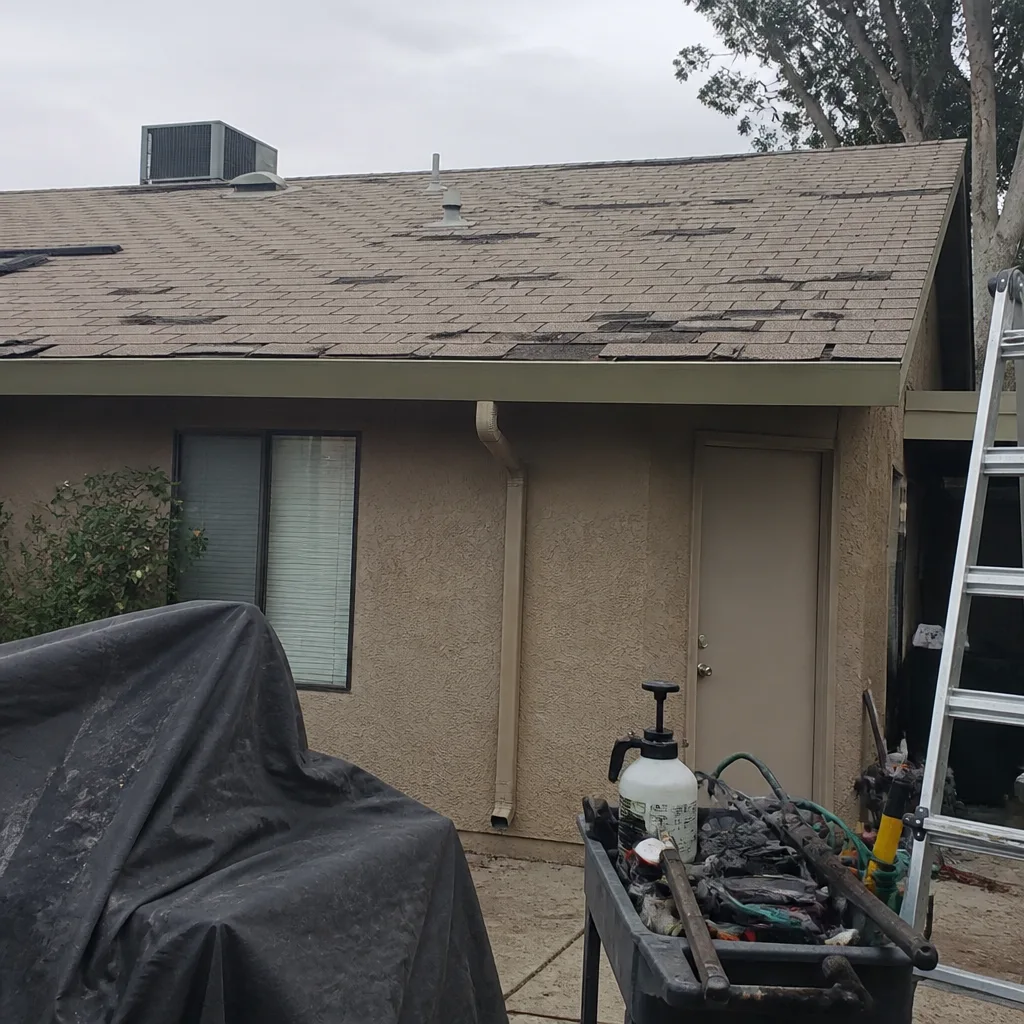 Before
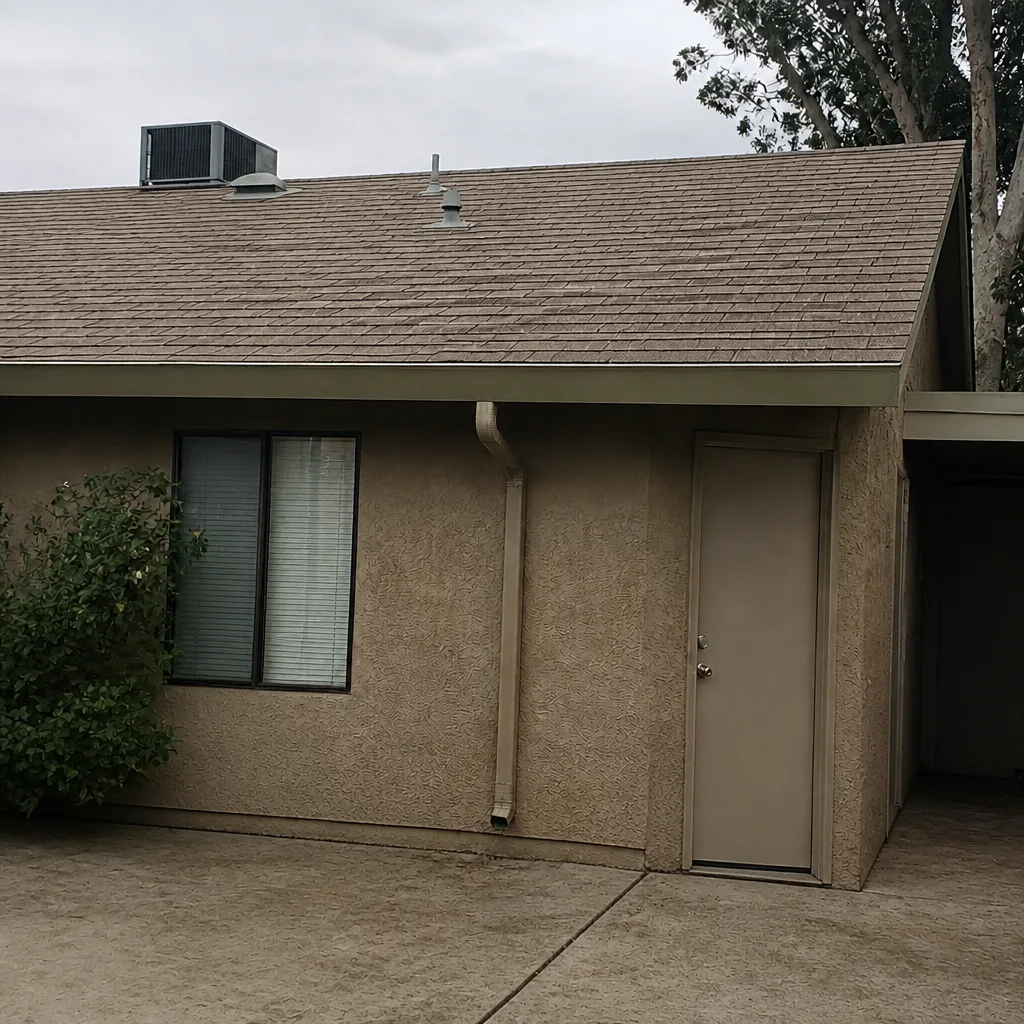 After
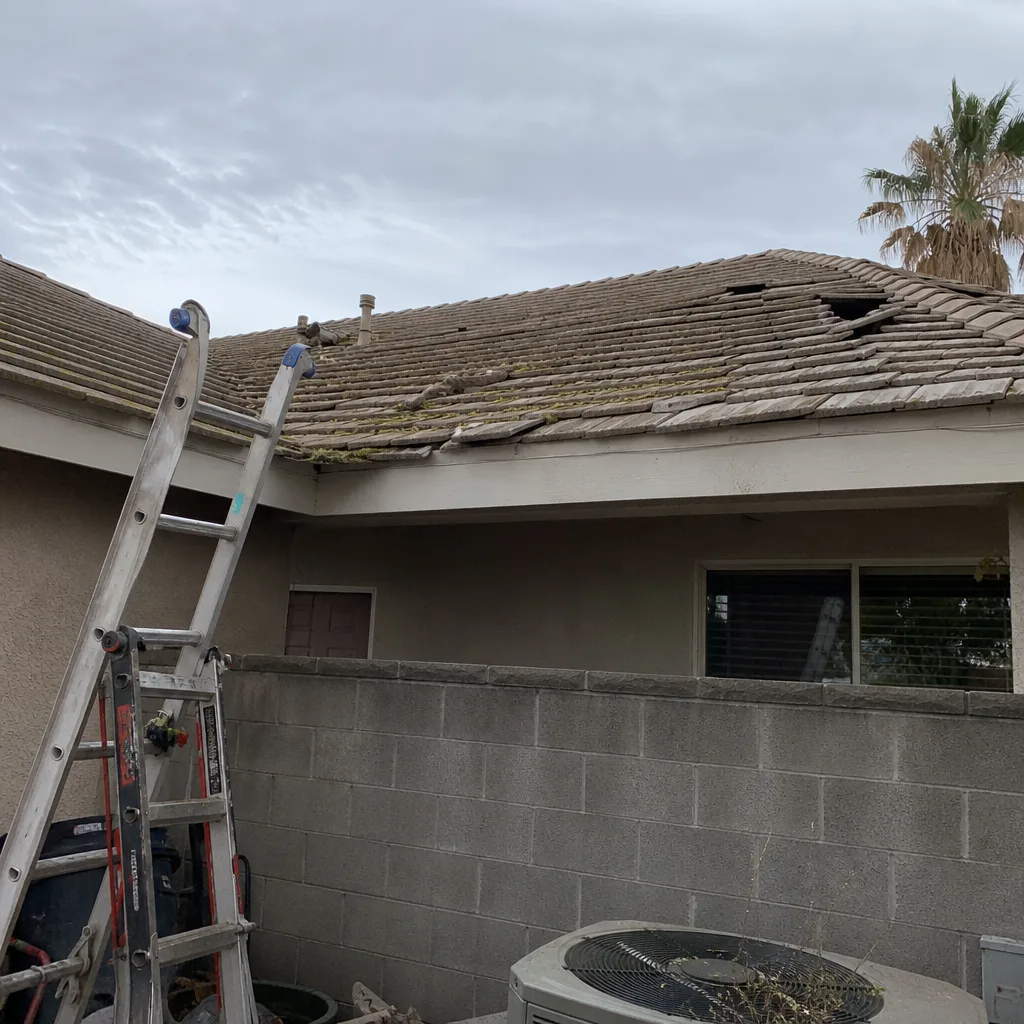 Before
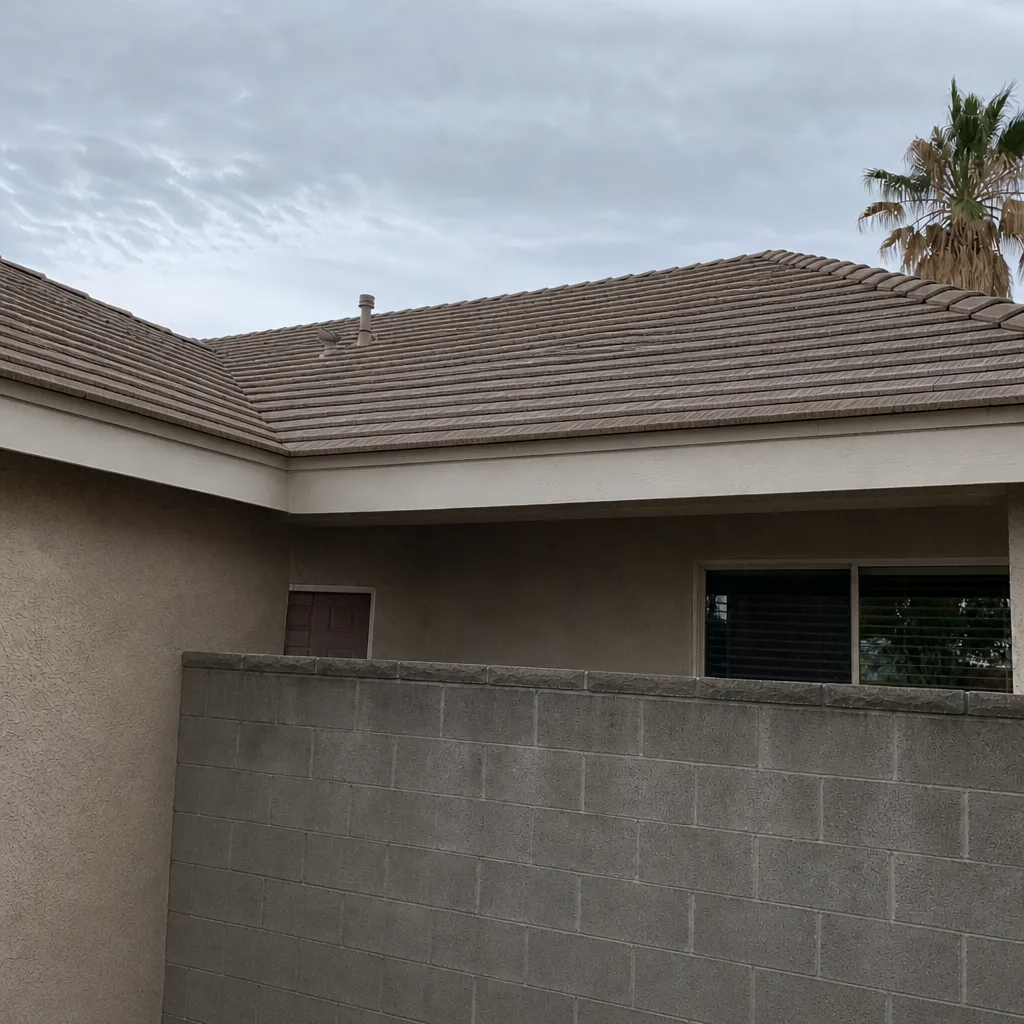 After
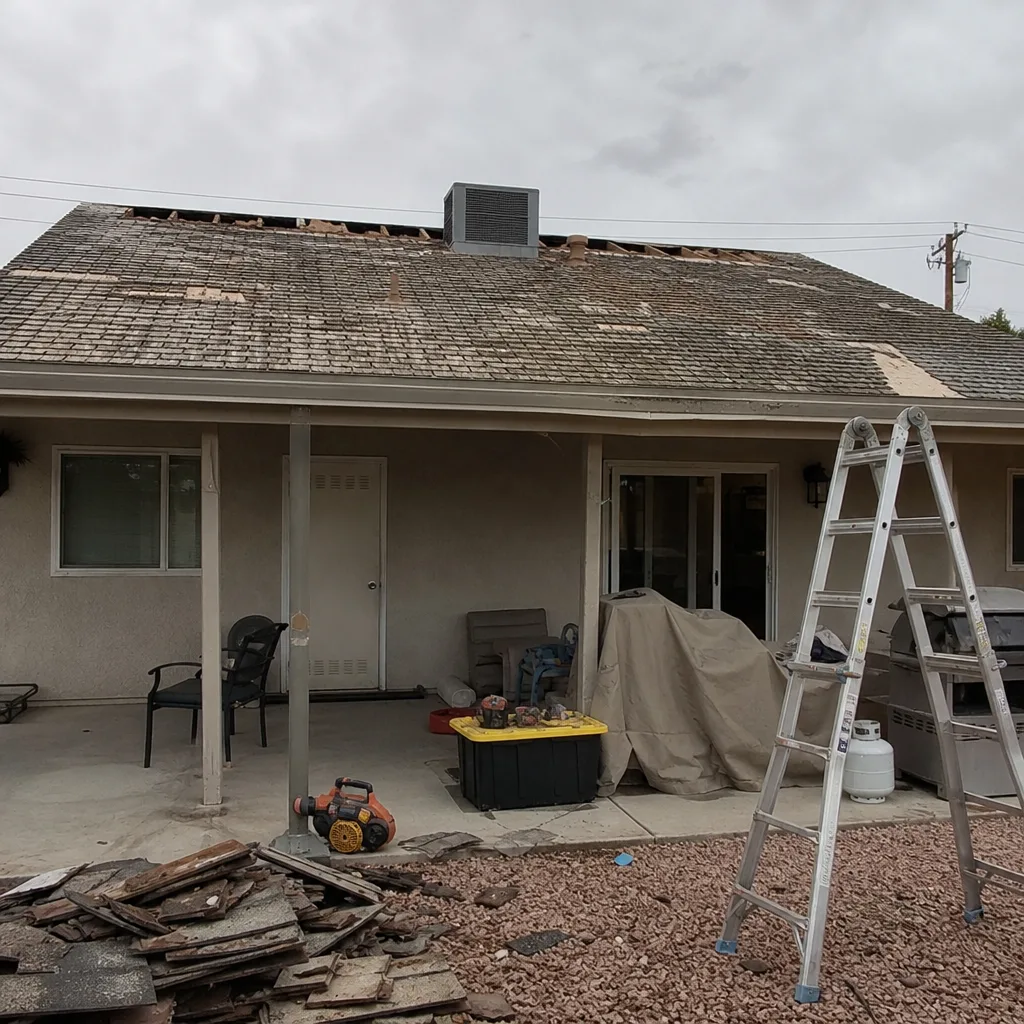 Before
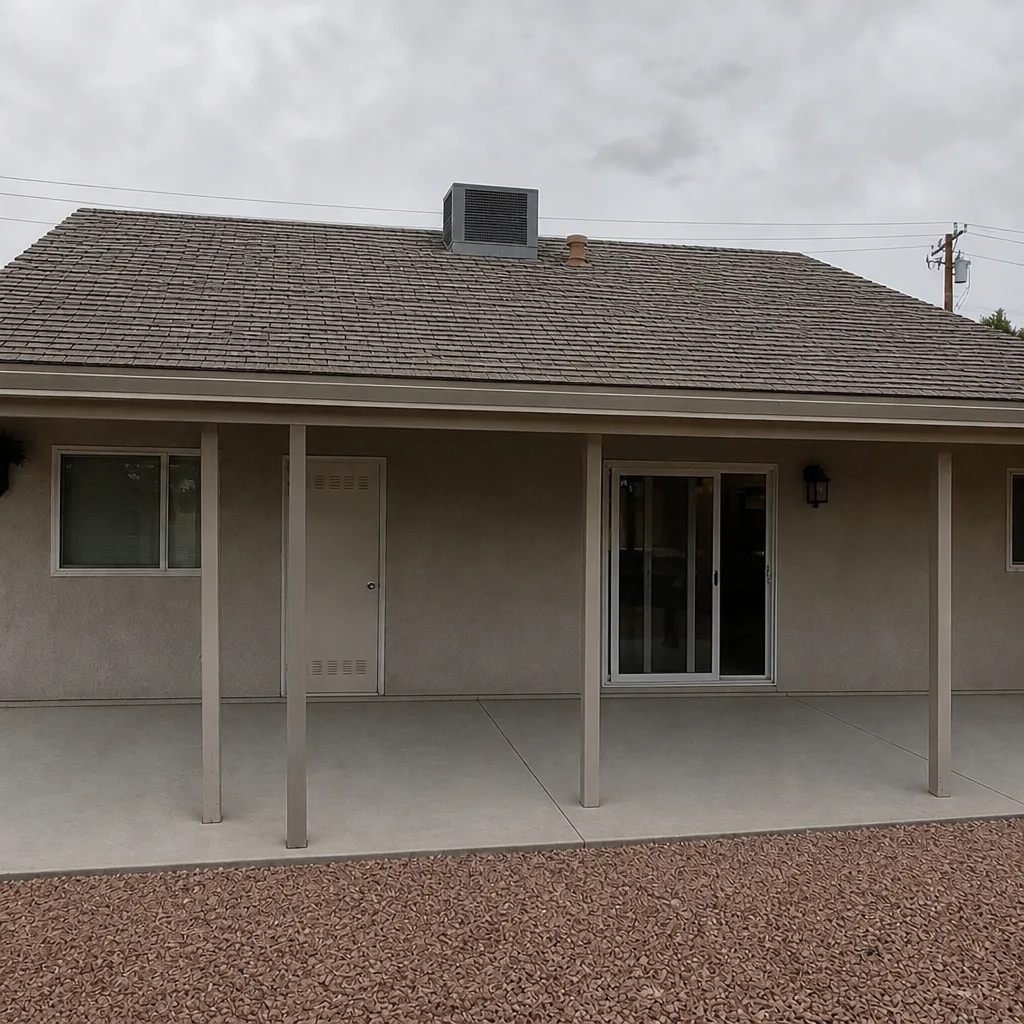 After
Frequently Asked Questions
Water travels along rafters and sheathing before it drips through the ceiling, so the entry point is usually two to six feet from the stain. Map the stain to the roof above, then search uphill and along the nearest penetrations. If you can’t find it, an inspection will trace the path for you.
Cost depends on the failure type, how much material is involved, and how many layers need to come up. Small flashing and penetration repairs sit at the low end; a larger section repair or flat-roof membrane work costs more. Call (833) 519-6453 for an exact quote after an inspection – estimates are free, and the written estimate sets the final price.
Repair when the damage is localized and the roof has life left; replace when granule loss is widespread, shingles are brittle and cracking, and leaks keep appearing in new spots. The honest answer requires an inspection, because the failure type and the roof’s age both matter. We repair when possible and replace when necessary, and the inspection is what tells us which is which.
In most cases, yes. We work with GAF, CertainTeed, Owens Corning, IKO, Atlas, Tamko, and Boral, so we can source a match for nearly any existing system without steering you toward a brand switch. Matching preserves the roof’s appearance and helps keep your warranty intact.
It’s serious if it recurs, because standing water finds every seam and stresses the membrane around any patch. It also breaks down faster in Henderson’s heat. Treat ponding as a drainage or slope problem to diagnose, not a hole to plug. Call (833) 519-6453 to get it looked at.
You can safely check the attic, gutters, and roof surface from the ground with binoculars, and note where stains appear. Never walk the roof, especially a steep pitch or one in summer heat. Leave the close-up diagnosis to a professional.
The Bottom Line
Roof troubleshooting in Henderson comes down to a few reliable ideas. The leak you see inside is rarely where the roof is failing, so work backward from the stain to the roof surface above it. Flashing and shingle failures look similar but need different repairs, and getting that wrong wastes money. Granule loss in your gutters is the clearest early read on how much life your shingles have left. Ponding on a flat roof is a drainage problem, not a hole to plug. And the whole desert climate makes heat stress the quiet driver behind most of it. Get an honest diagnosis before you commit, and every repair decision gets simpler.
Contact Us
If you’ve found a stain, a missing shingle, or a flat roof that won’t drain, the next step is a real diagnosis, not a guess. We inspect before we recommend, so you’ll know what’s failing and why before anyone hands you a scope of work. Call (833) 519-6453 for a free estimate. We answer 24/7. Fast dispatch from 7am to 7pm, Sunday through Friday, and we’re closed on Saturday. Repair when possible, replace when necessary, and a written estimate that sets the final price.
Written by the team at Delmar Roof Repair.