
Last updated November 16, 2026
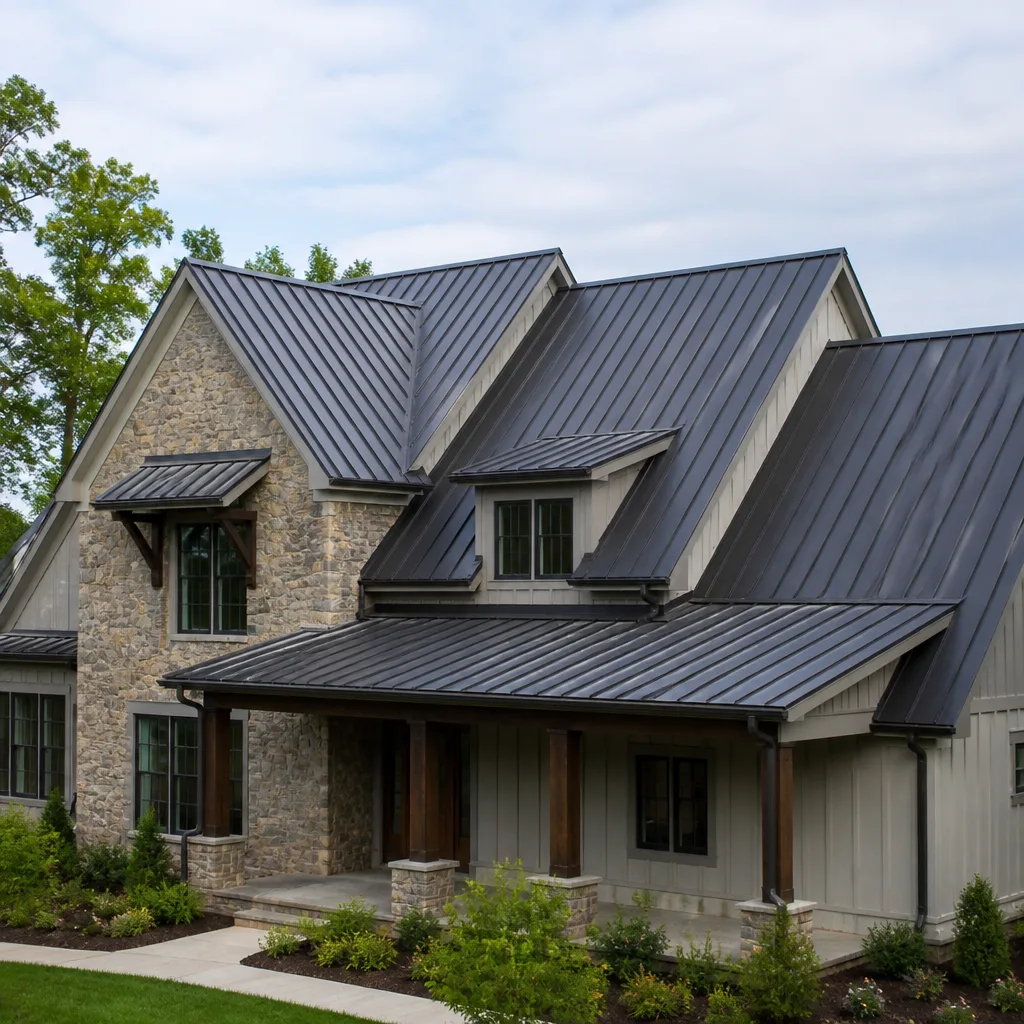 Metal roofing
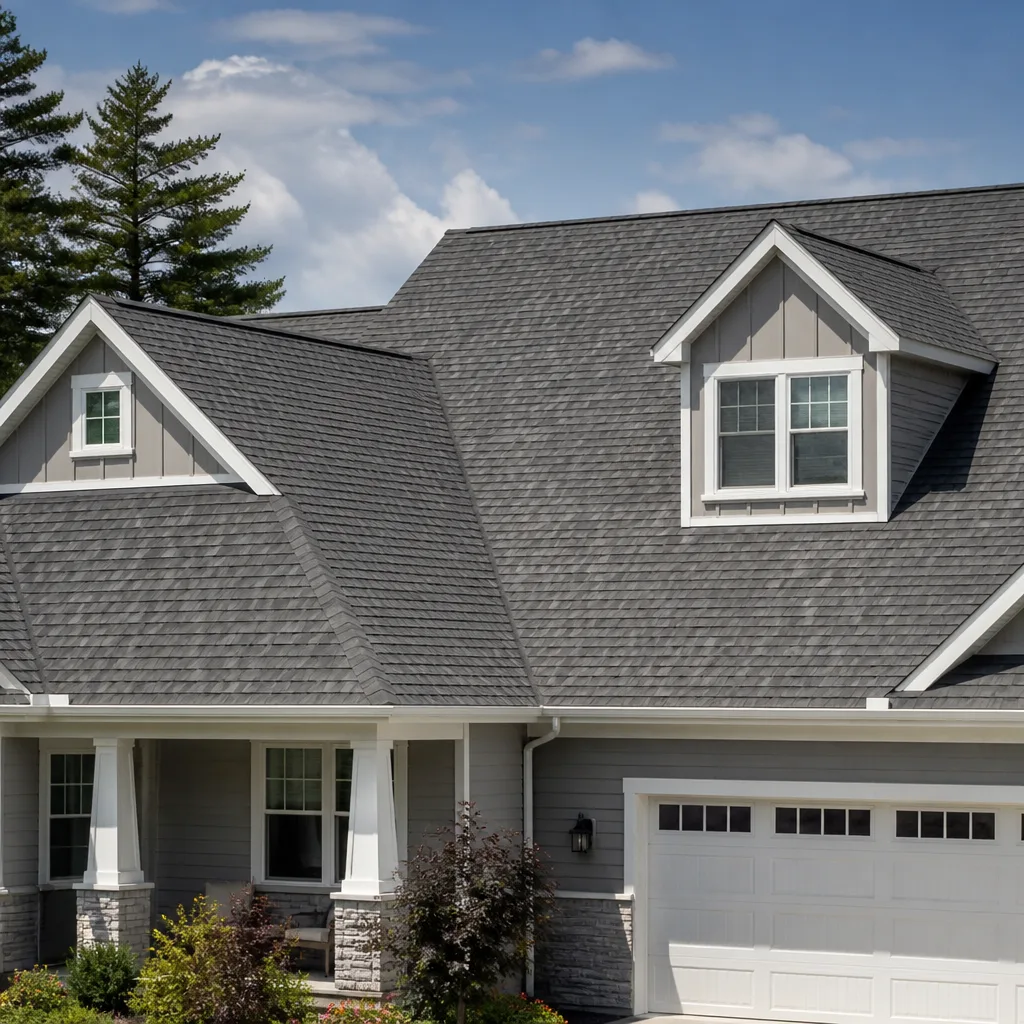 Architectural shingles
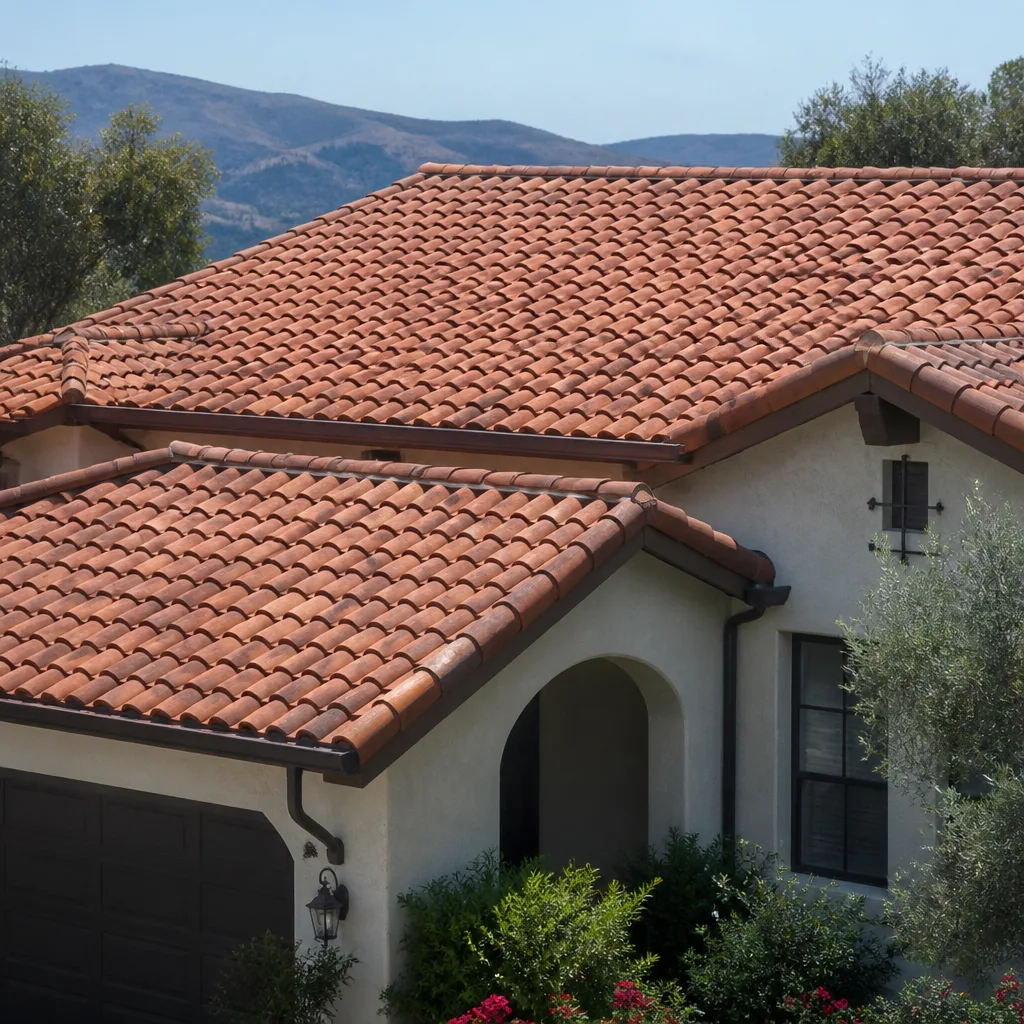 Tile roofing
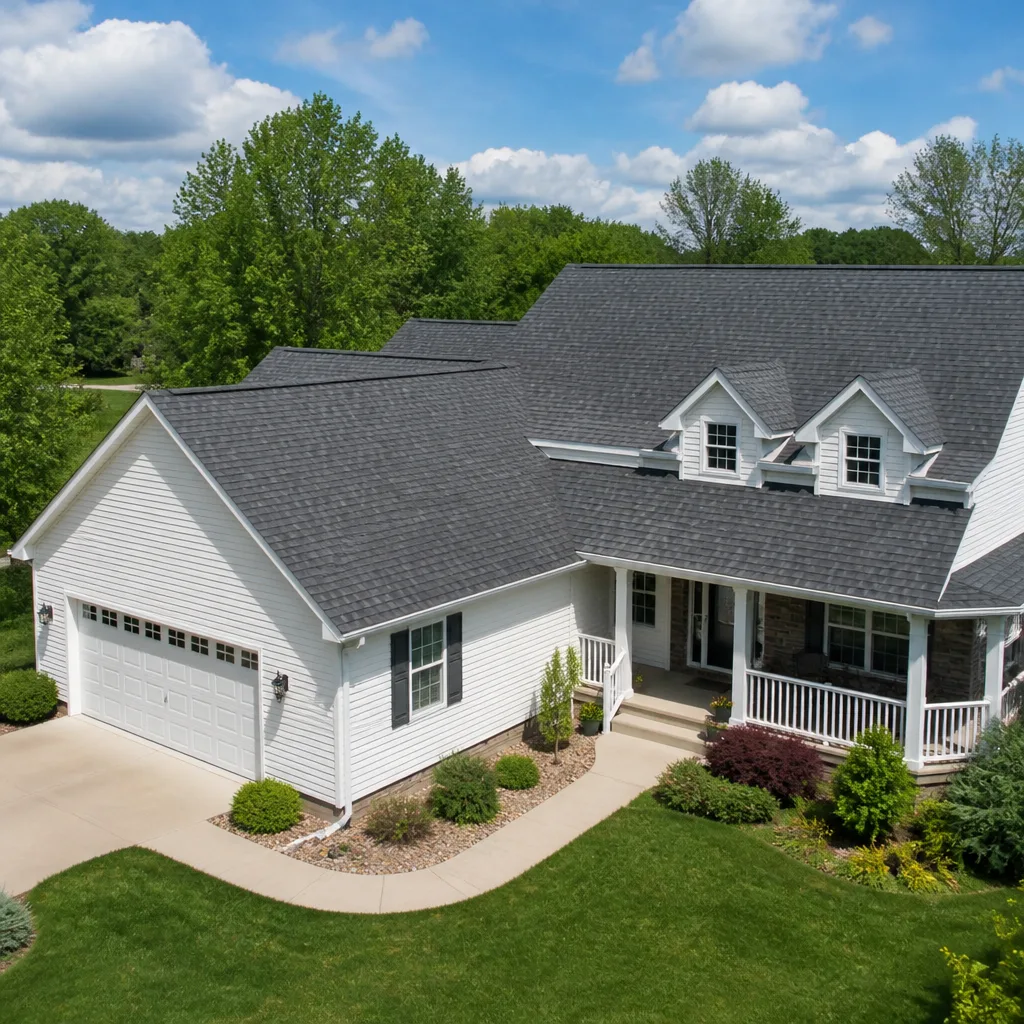 GAF
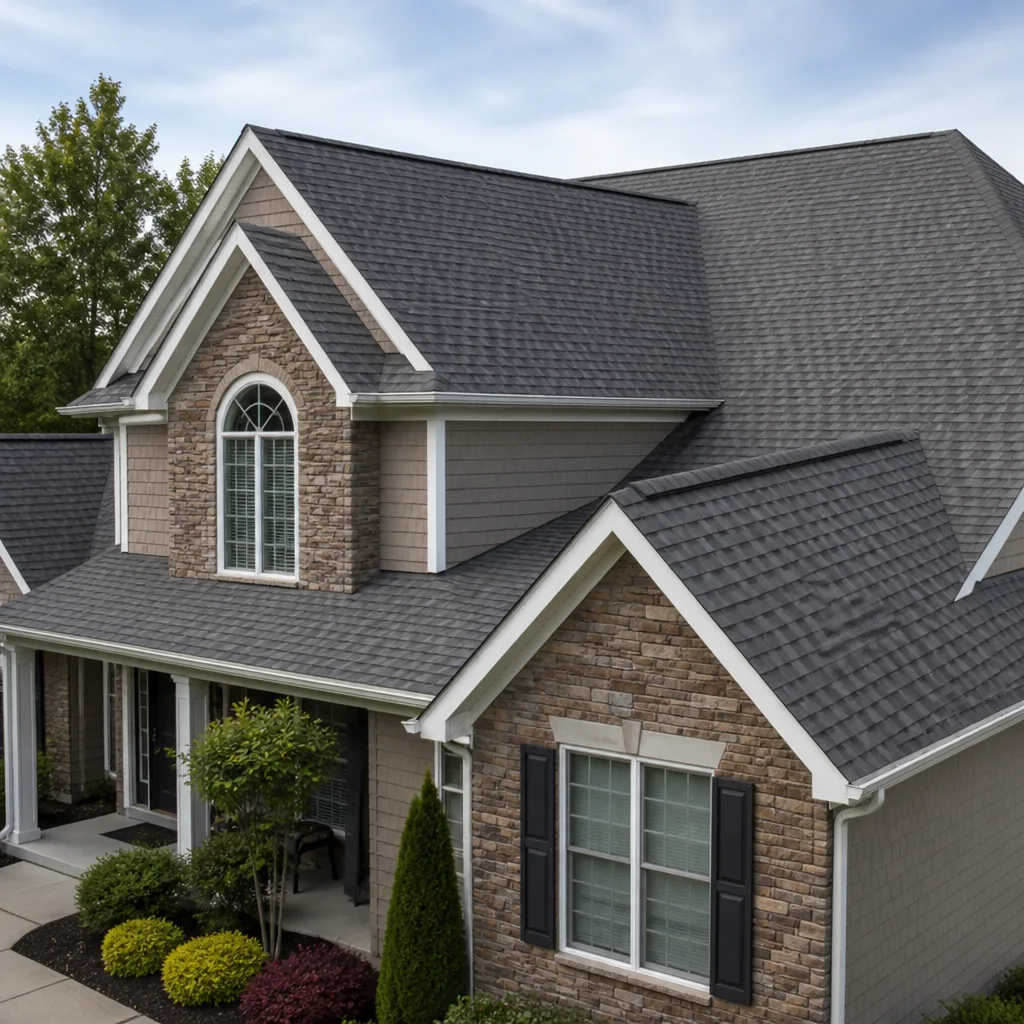 Owens Corning
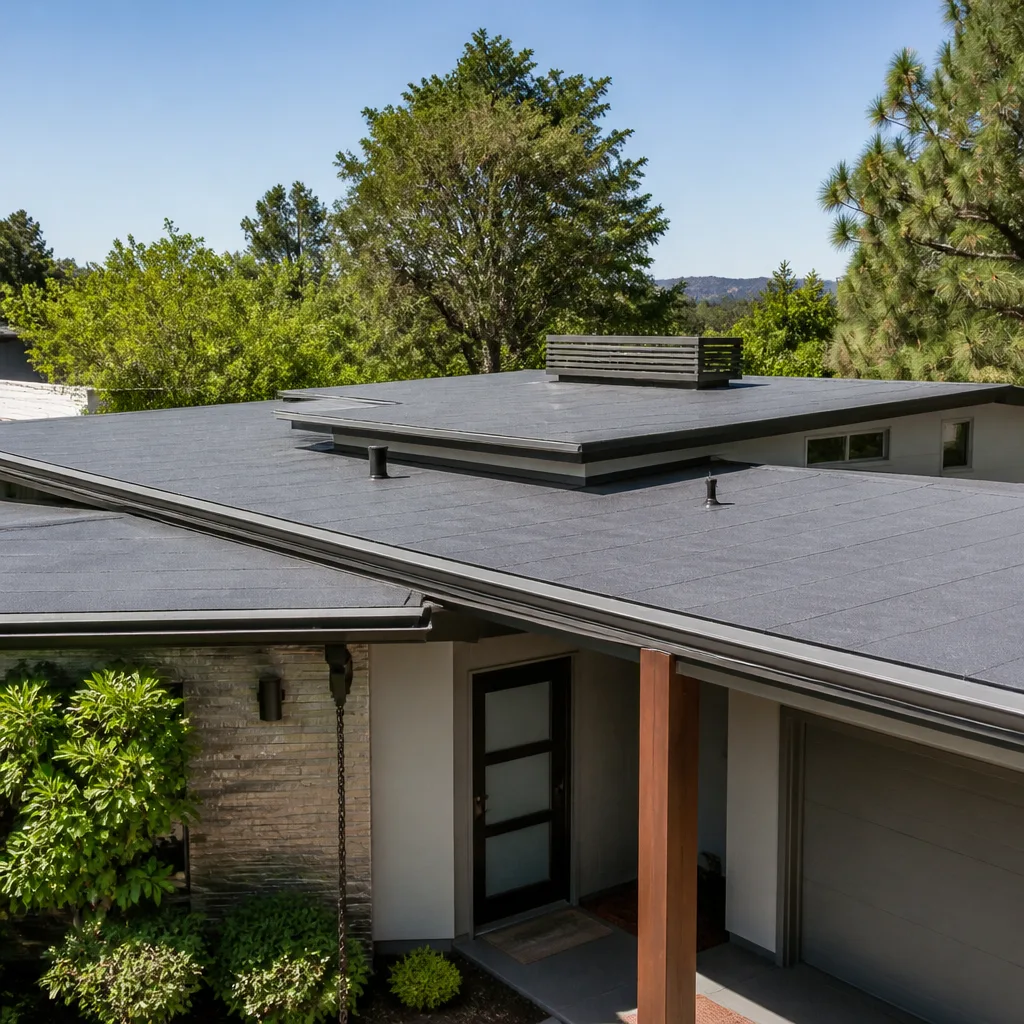 Flat & low-slope
Free roof inspection with deck photos before we talk money - GAF and Owens Corning certified installation
DIY vs Professional Roofing: The Henderson Homeowner’s Decision Guide
Most articles about do-it-yourself roofing focus on skill and cost. That misses the two variables that actually decide the question in Henderson: extreme heat and warranty preservation. A homeowner on a roof in July is working in conditions OSHA classifies as extreme heat, where surface temperatures can push past 170°F, and a shingle system installed or patched outside manufacturer guidelines can quietly lose its coverage. This guide draws the line based on what this climate and Nevada’s licensing rules allow – not on how handy you are. You’ll learn which tasks are legitimately yours, which voids your warranty, and how to run an honest cost comparison.
Quick Answer
Nevada homeowners can legally handle light maintenance, visual inspections, caulking, and temporary tarping on their own roof, but anything touching the roofing system itself – shingle replacement, decking repair, flashing, and anything requiring a permit – is best done by a licensed roofing professional. In Henderson, the deciding factors are heat safety from May through September and whether your repair preserves or voids the manufacturer warranty on your shingles.
Styles & brands we work with
- Architectural shingles
- Metal roofing
- Tile roofing
- GAF
- Owens Corning
- Flat & low-slope
Table of Contents
- The Heat Safety Reality Check in Henderson
- What Nevada Homeowners Can Legally Do Themselves
- How DIY Repairs Void Manufacturer Warranties
- The Legitimate DIY Scope: Four Tasks You Can Own
- The True Cost Comparison: DIY vs a Professional Bid
- Why an Inspection Comes First, Every Time
- Common Mistakes to Avoid
- When to Call a Professional
The Heat Safety Reality Check in Henderson
Roof surface temperatures in Henderson don’t track the air temperature – they run well above it. On a day when the forecast reads 105°F, dark asphalt shingles can reach 160°F to 170°F or higher in direct afternoon sun, and attic underlayment traps heat beneath them. Polymer-modified asphalt softens. The granules on shingles loosen underfoot. And a person standing on that surface in work boots is absorbing radiant heat from below as well as solar heat from above.
This is why the safe working window across most of the year is narrower than homeowners expect. From May through September, roof work realistically has to happen in the early morning, and even then the surface warms fast. The rest of the day is a legitimate heat hazard, not a comfort issue. Heat illness on a roof escalates quickly because there’s no shade, no breeze at shingle level in many roof profiles, and no quick way down.
A few practical realities that shape timing:
- May through September: the viable window is early morning, and it closes fast. Multiple short sessions beat one long afternoon.
- October through April: daytime temperatures are workable, though the roof can still be warm by early afternoon and mornings can be cold enough that shingles are stiff and brittle.
- Any month: hydration and a spotter matter more than most DIY guides admit, and no one should be on a hot roof alone.
We’ve spent enough time on Henderson roofs to know that the heat calculus is what separates this from a project you can knock out on a whim. Deferred roof repairs often get pushed to July, which is the worst possible month to be up there. If your leak surfaced in spring, the smart move is to handle it before the heat peaks, or hand it to a professional who does this in the heat as a matter of course.
If you’re not sure whether your roof problem can wait for cooler weather, a Delmar Roof Repair inspection gives you a straight answer before you climb a ladder.
What Nevada Homeowners Can Legally Do Themselves
Nevada, like most states, allows homeowners to perform work on their own primary residence without holding a contractor’s license. The line isn’t “any work on your own house is fine” – it’s “work that would normally require a licensed contractor becomes an issue the moment a permit, an inspection, or a warranty claim enters the picture.” A homeowner can replace a light fixture on their own property; the same logic lets them patch a shingle. What it doesn’t let them do cleanly is pull a roofing permit in their own name across every jurisdiction and pass the inspection that follows.
Here’s where the line actually falls for most Henderson homeowners:
- Clearly within your rights: visual inspections from the ground or a ladder, minor caulking around flashing and penetrations, cleaning debris from valleys, and temporary tarping after a storm.
- Legally gray: replacing a small number of shingles, patching a small area, sealing a persistent leak from above. A homeowner can physically do this, but the work may trigger permit questions or void product coverage.
- Not a homeowner call: full or partial reroofing, structural decking repair, ridge and valley reconstruction, and anything requiring a city inspection sign-off. These need licensed labor and a permit in most Southern Nevada jurisdictions.
Permits aren’t just paperwork – they create the record that a future buyer, an insurer, or a warranty administrator will want to see. A roof replacement done without a permit can complicate a home sale down the road. Before any roofing work that involves more than a patch, call your city’s building department and ask what a permit for your scope of work requires. That one call resolves most of the uncertainty.
If the job does need a permit, that’s a strong signal it needs a licensed roofer. Our roof repair service handles the permit process as part of the job, and inspections are scheduled as part of the scope.
How DIY Repairs Void Manufacturer Warranties
This is the part most homeowners never read until they file a claim. Shingle manufacturers – Owens Corning, IKO, Atlas, Tamko, and the rest – cover their product against manufacturing defects, not against installation error. The warranty language almost always conditions coverage on installation in accordance with the manufacturer’s published instructions and by a qualified or licensed applicator. The moment a homeowner makes an unapproved modification, patches with a different product, or installs shingles outside the specified nailing pattern or overlap, the manufacturer has grounds to deny a claim.
Two specific warranty issues come up again and again:
- Mixing products. If you patch a Tamko field with a shingle from a different line or a different manufacturer, the color and profile won’t match, and the warranty administrator can point to a non-compliant installation. Even within the same brand, mixing products across an existing roof can void coverage on the affected area.
- Improper fastening and laps. A patch that nails high, overlaps wrong, or skips the required underlayment creates an installation defect that shows up in the manufacturer’s review. That defect is what turns a small leak into a denied claim.
The other half of coverage sits with the installer’s workmanship warranty, and that’s where a licensed roofer matters even more. A workmanship warranty is only as good as the company standing behind it. A DIY repair has no workmanship warranty at all – you are the installer, and you’re also the claimant.
If you already have a roof under one of the seven major shingle brands we work with – GAF, CertainTeed, Owens Corning, IKO, Atlas, Tamko, and Boral – the right repair preserves the coverage already attached to your roof. Matching the existing system matters. Before you grab a bundle from a big-box store, check what’s actually on your roof; our roof replacement and repair work is built around matching the installed system, not forcing a switch.
The Legitimate DIY Scope: Four Tasks You Can Own
Not every roof task needs a contractor. Four are genuinely within a homeowner’s reach, and doing them well protects the roof between professional visits. Do them safely: from the ground when possible, from a stable ladder when not, never on a hot roof, never in wind, and never alone on a two-story home.
- Gutter maintenance. Clear leaves and debris from gutters and downspouts, especially before monsoon season. Clogged gutters send water back under the roof edge and into fascia, which is one of the more common causes of interior leaks in Henderson homes after a summer storm. Wear gloves and eye protection; gutter debris carries sharp edges and insects.
- Minor caulking. Inspect sealant around vent pipes, chimney flashing, and any roof penetration. If the bead has cracked or pulled away, a proper roofing sealant applied to a clean, dry surface reseals it. Don’t caulk over wet or dirty material – it won’t adhere, and you’ll be back to the same spot in a week.
- Visual inspections. Walk the perimeter of the home with binoculars and look for lifted or missing shingles, granule loss in gutters (a sign of aging shingles), staining on ceilings below the roof, and sagging in the roof line. Note what you find. That record is valuable to a roofer and to a future buyer.
- Emergency tarping. After a storm, a properly secured tarp can keep water out until a professional can get there. Use a heavy-duty tarp, secure it to the fascia rather than through the shingles, and overlap the highest point of the leak. A tarp is a stopgap, not a repair – plan to have it addressed.
The distinction is simple: you can maintain, monitor, and temporarily protect the roof. You can’t safely rebuild any part of the shingle system. When in doubt, treat the task as professional work.
The True Cost Comparison: DIY vs a Professional Bid
The honest comparison isn’t “shingles plus nails versus a contractor’s invoice.” It’s total cost including risk, warranty, permit, and time. A homeowner patching a leak in Henderson often spends less on materials but takes on the risk of a warranty denial, an inspection failure, and a second repair when the first doesn’t hold. A professional bid bundles the material, the labor, the permit, the insurance coverage that protects you if something goes wrong on your property, and the warranty that survives after the work is done.
A fair cost comparison looks like this:
- DIY material cost: shingles, underlayment, sealant, nails, and any rental tools. Usually the smallest line item in the project.
- Risk cost: the chance the repair fails and needs a second visit, and the chance the manufacturer denies a future claim because the installation was non-compliant. This number is invisible until it happens.
- Professional bid: labor, materials, permit, inspection, drop protection, disposal of old material, and a workmanship warranty. More on paper – but the price is set in a written, line-item estimate before anyone touches your roof.
The comparison mostly pays off when the job is small and clearly cosmetic. It stops paying off the moment the scope involves the shingle system, the decking, or an active leak into living space. A homeowner who patches a small fascia leak on a low slope and gets it done well has saved money. A homeowner who patches a valley leak and hides the problem for a season usually spends more than the original repair would have cost.
A professional bid also tells you what the roof actually needs. That’s the difference between “what will it cost to fix this” and “what will it cost if I don’t.” In our experience, homeowners who start with a written estimate – even if they later do part of the work themselves – make better decisions with that number in hand.
Why an Inspection Comes First, Every Time
Before comparing DIY and professional, the right first step is a real diagnosis. A roof inspection performed by a roofer gives you three things: the actual condition of the shingles, the source of any leak (which is often not directly above where the stain appears), and a clear repair-or-replace recommendation. Without that, both DIY and professional bids are guesses.
A standalone inspection is a distinct service, not a sales appointment. It answers whether the roof needs repair, replacement, or monitoring, and how much each would cost. That’s the starting point – not the upsell. A homeowner who walks into a roofing decision with an inspection in hand is in a very different position from one who starts with a contractor’s quote that assumes replacement.
If your roof is in a Henderson neighborhood – established areas like Green Valley or Anthem, or older pockets near downtown – the housing stock varies widely, and the age of the roof varies with it. A house built in one era may have decking that handles a patch well; another may have layered shingles that make a spot repair pointless. Only an on-roof inspection sorts that out.
Our Henderson guide covers the local conditions that shape roof wear here, from summer wind to seasonal temperature swings. Pair it with an inspection and you’ll know exactly where your roof stands.
Common Mistakes to Avoid
- Starting work on a mid-day summer roof. The surface can exceed 170°F in July, and heat illness escalates faster than most homeowners expect. If a task can’t be done in the early morning, it belongs with a professional.
- Patching with a different shingle brand. Mixing products voids the manufacturer’s coverage on the affected area and never matches color or profile. Matching the existing Owens Corning, IKO, or Tamko system is what preserves the warranty.
- Skipping the inspection and quoting yourself. A contractor who quotes before climbing a ladder is guessing. So is a homeowner patching what looks like the spot. Water travels.
- Ignoring permit requirements. Reroofing without a permit can surface as a problem at sale or after a claim. Call the city building department before any structural or system-level roof work.
- Letting a tarp become a permanent fix. A tarp is a stopgap. Tarped repairs left in place for a full season hide damage that gets more expensive to fix.
- Treating a valley or ridge leak as a spot repair. Valleys and ridges are the load-bearing parts of the shingle system. Repairs there need proper materials and technique.
- Assuming heat damage is only about summer. Henderson’s cooler months can make shingles stiff and brittle, so winter repairs have their own failure modes. Cold shingles crack when bent.
See the difference
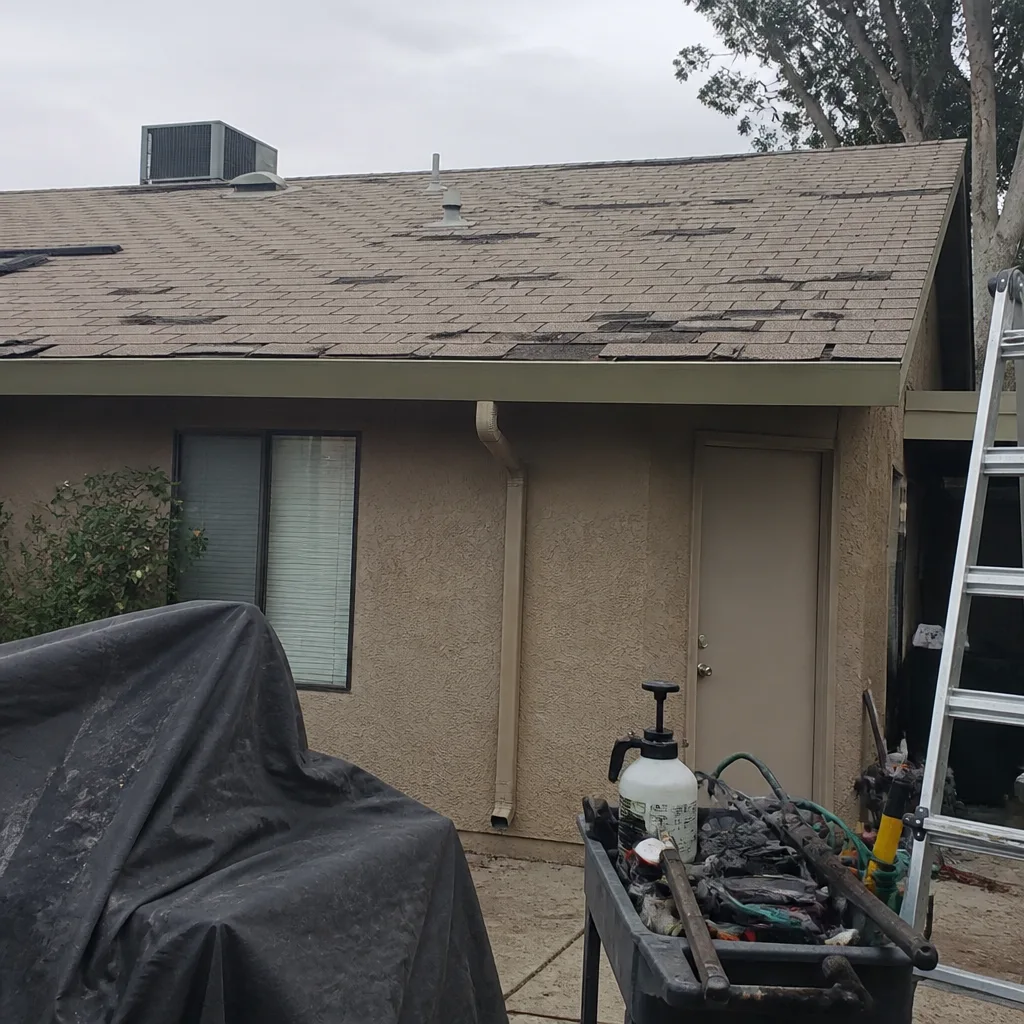 Before
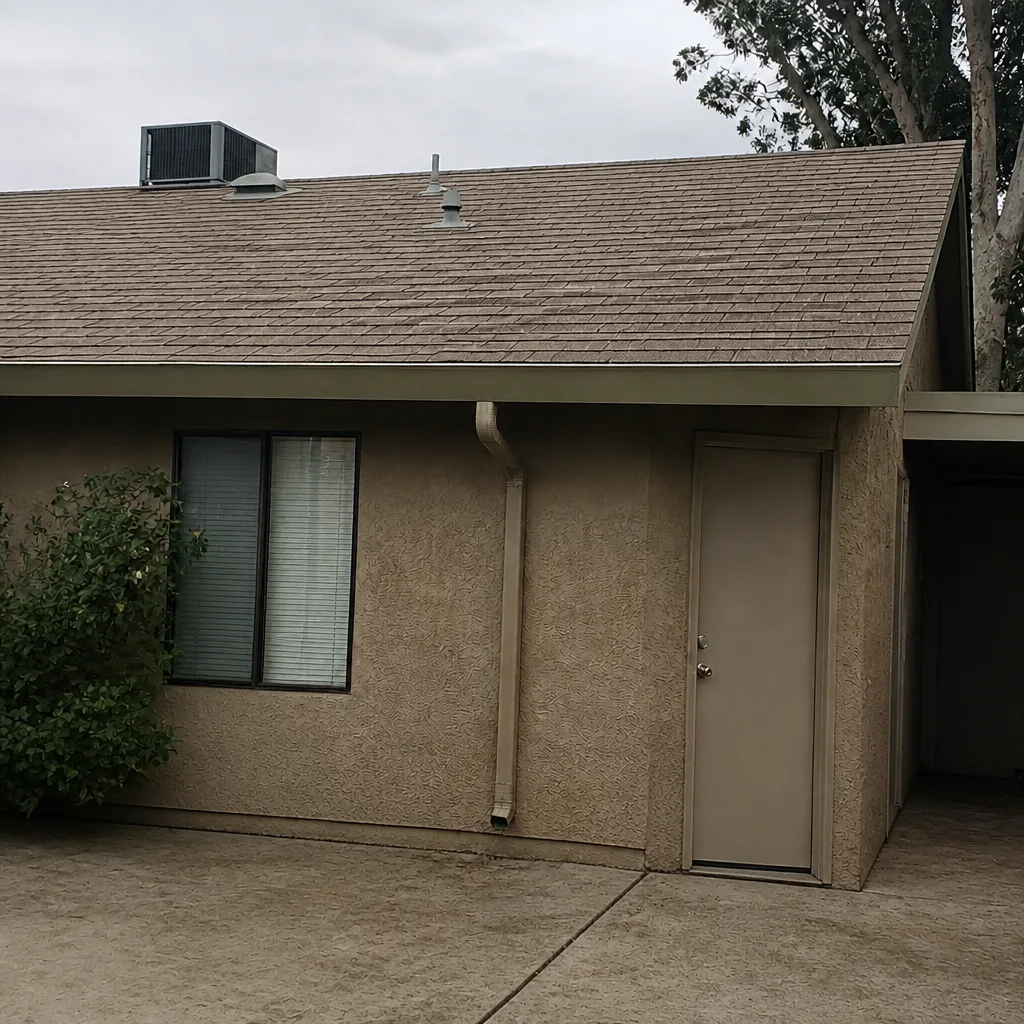 After
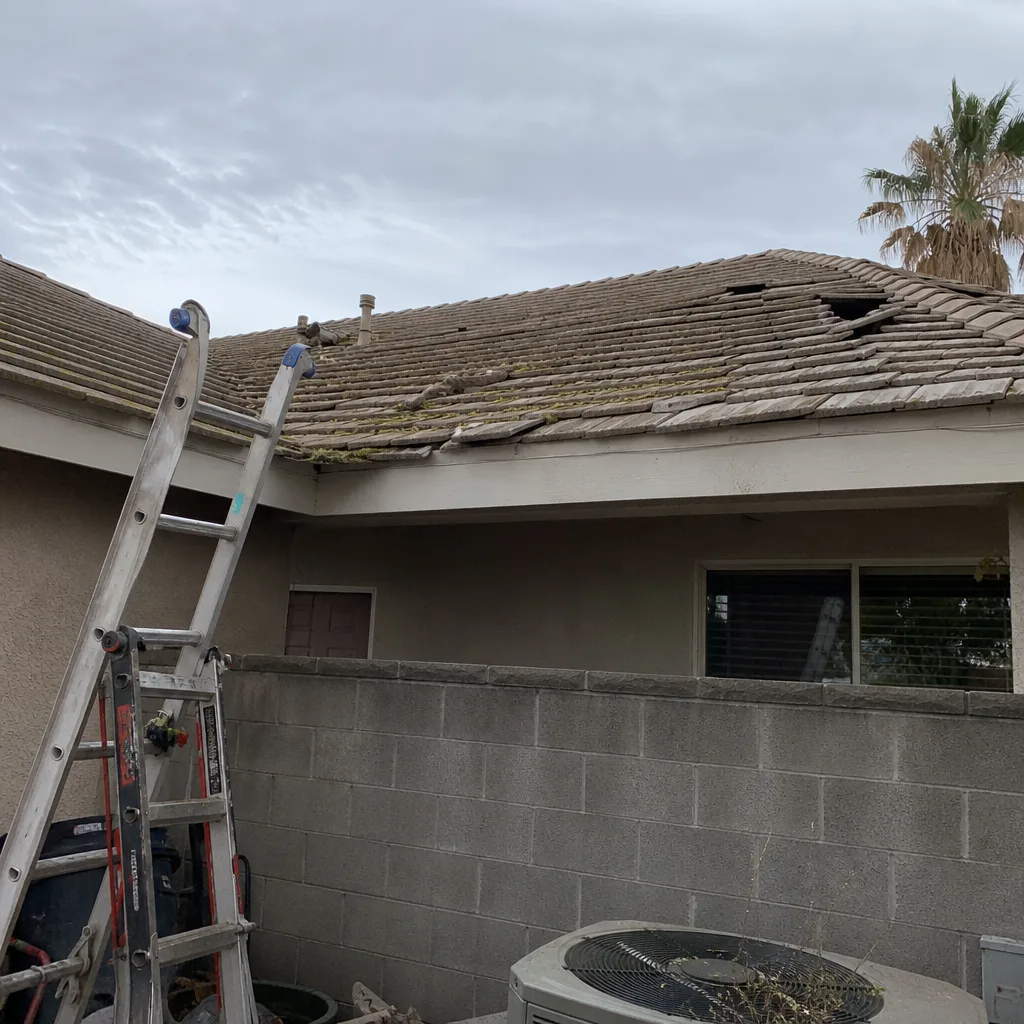 Before
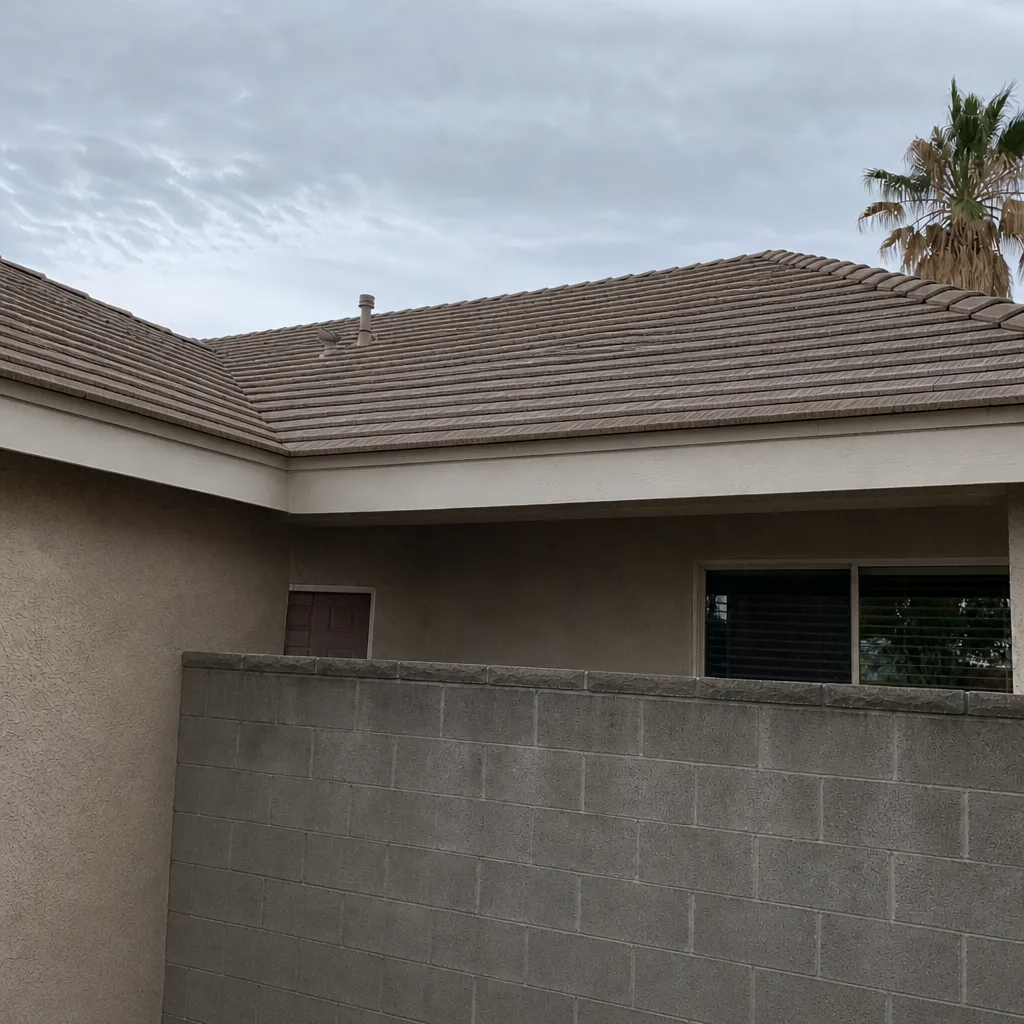 After
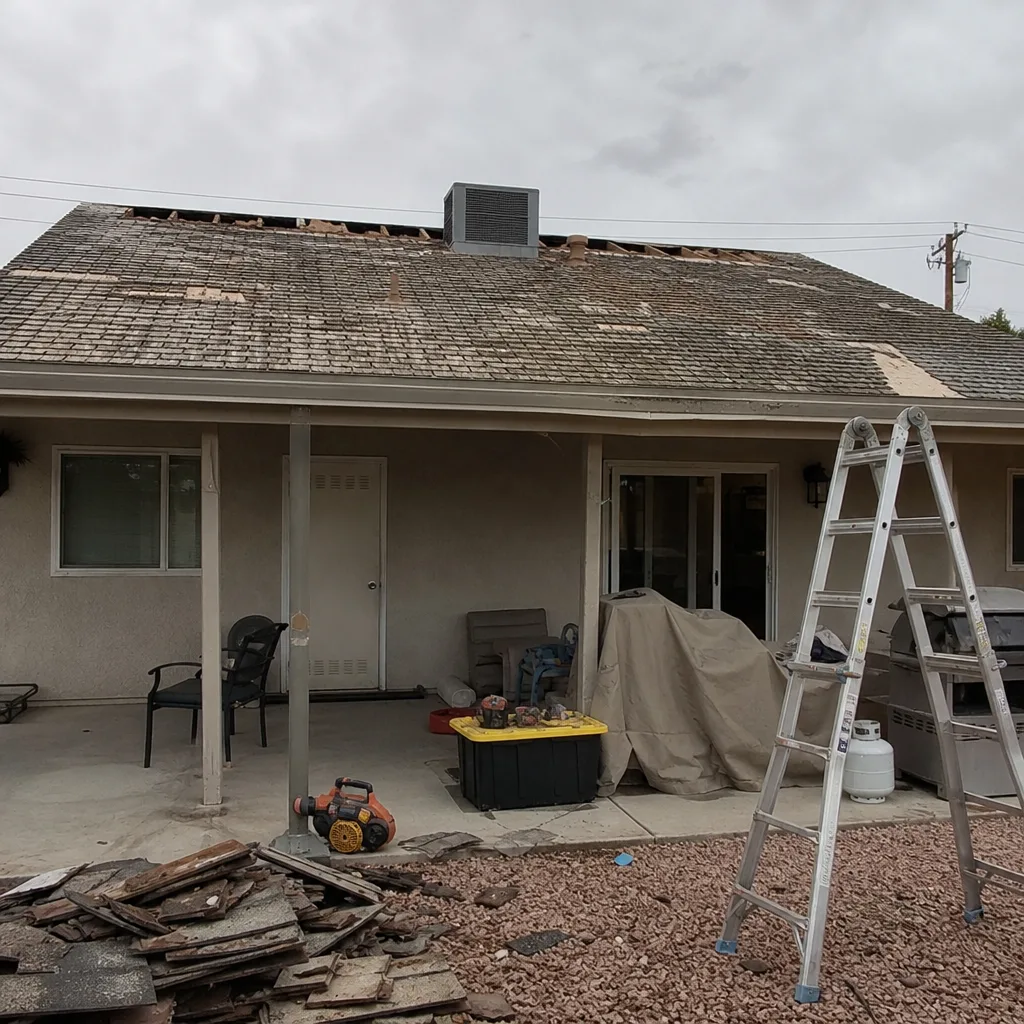 Before
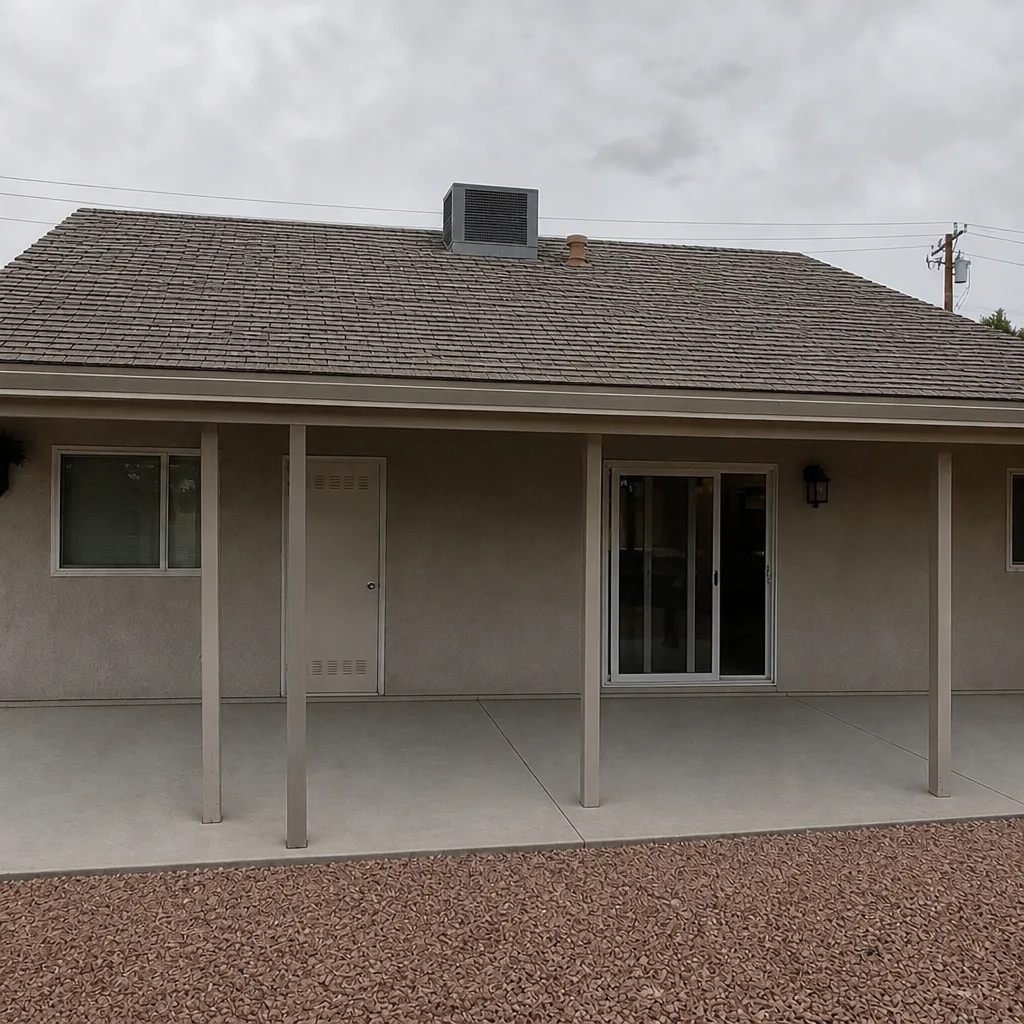 After
When to Call a Professional
Call a professional for any active leak into the living space, missing or lifted shingles after a wind event, water stains on a ceiling or in the attic, granule loss that’s accumulating in gutters, or a roof over a decade old that’s showing wear. Call for anything requiring a permit. Call for a roof with layered shingles or a valley leak. And call for any inspection you don’t want to do from a ladder in the heat. Delmar Roof Repair offers free estimates in Henderson. Call (833) 519-6453. We answer 24/7. Fast dispatch from 7am to 7pm, Sunday through Friday.
Frequently Asked Questions
Yes for light maintenance – caulking, gutter cleaning, visual inspections, and emergency tarping – but not for anything touching the shingle system, decking, or flashing that needs a permit. Nevada allows homeowners to work on their own home, but permit and inspection requirements push most shingle repairs into professional territory. If you’re unsure which side of that line your job falls on, call (833) 519-6453 for a free estimate.
It can. Manufacturer warranties on Owens Corning, IKO, Atlas, Tamko and other shingle systems typically condition coverage on installation per published instructions by a qualified applicator, so an unapproved patch or a mixed-product repair can void coverage on that area. A written professional repair that matches the existing system is what preserves the warranty. Call (833) 519-6453 to talk through your roof brand.
July and August are the peak-risk months, with roof surface temperatures that regularly exceed 170°F in direct afternoon sun. From May through September the safe working window is realistically the early morning, and even then the surface warms fast. Call (833) 519-6453 if you’re not sure whether your repair can wait for the cooler months.
Small cosmetic repairs usually don’t, but full or partial reroofing and any structural work generally do. Requirements vary by jurisdiction, so the safest move is to call your city’s building department and describe the scope. A licensed roofer pulling the permit and passing the inspection protects the work when you sell or file a claim. Call (833) 519-6453 for a free estimate on permit-required work.
Compare total cost including risk, warranty, permit, and insurance – not just material cost. A homeowner patch is cheap on paper but can trigger a warranty denial and a second repair, and it carries no workmanship warranty. A written professional estimate bundles the whole job with a fixed price and coverage behind it. Call (833) 519-6453 for a free line-item estimate.
Yes. An inspection tells you what the roof actually needs – repair, replacement, or monitoring – and how much each would cost, which is the only way to compare DIY and professional honestly. Skipping it means guessing at the scope. Call (833) 519-6453 to schedule a standalone inspection in Henderson, and estimates are free.
The Bottom Line
The DIY vs professional decision in Henderson isn’t about whether you’re capable of getting on a roof. It’s about whether the work can be done within the heat-safe window from May through September, whether it stays inside Nevada’s permit rules, and whether it preserves the manufacturer warranty on the shingles already installed. Light maintenance – gutter clearing, minor caulking, visual inspections, and emergency tarping – belongs to you. Anything touching the shingle system, decking, valleys, or ridges belongs to a licensed roofer with a written estimate and a workmanship warranty. Start with an inspection, then make the call with a real number in hand.
Our technicians have up to 10 years of experience across GAF, CertainTeed, Owens Corning, IKO, Atlas, Tamko, and Boral systems. We inspect before we recommend, repair when possible, and replace when necessary – and we let your roof’s needs set the scope. Call (833) 519-6453 for a free estimate. We answer 24/7. Fast dispatch from 7am to 7pm, Sunday through Friday.
Written by the team at Delmar Roof Repair.