
Last updated November 16, 2026
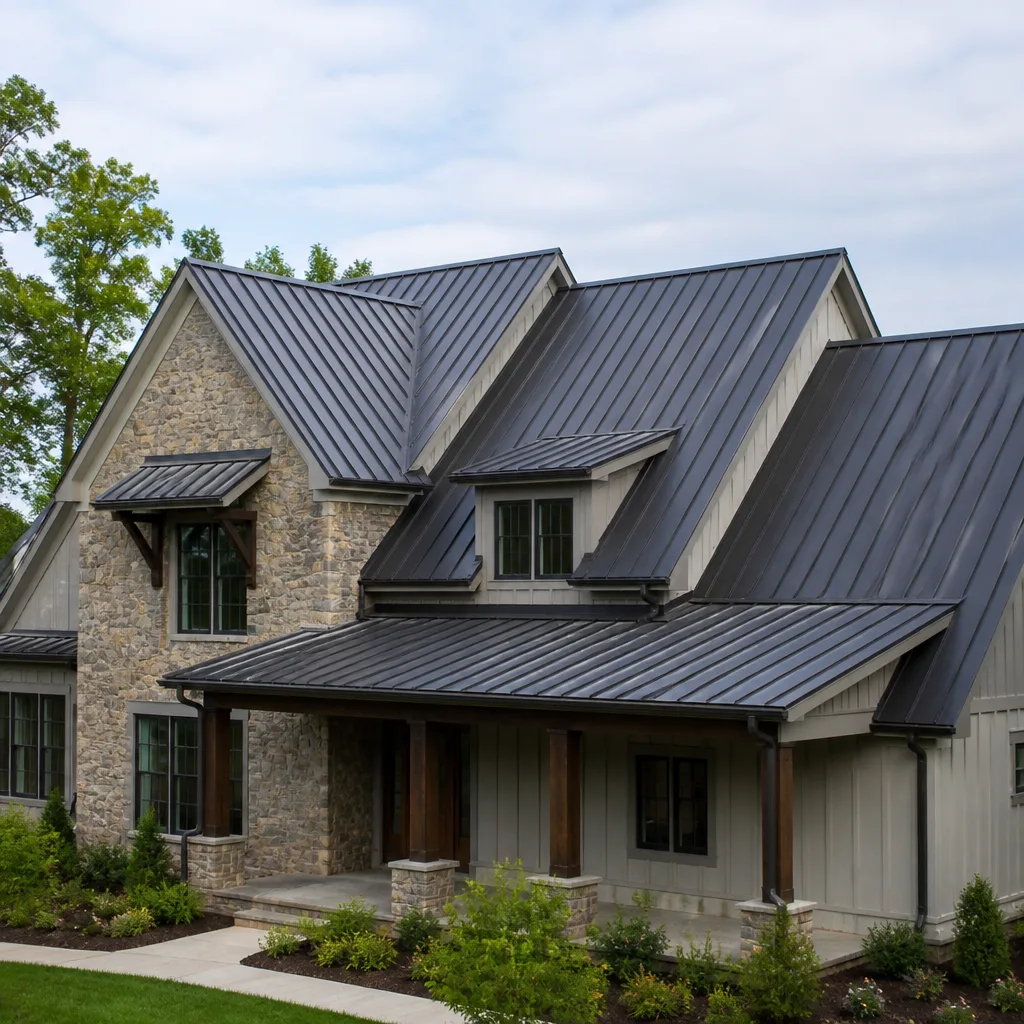 Metal roofing
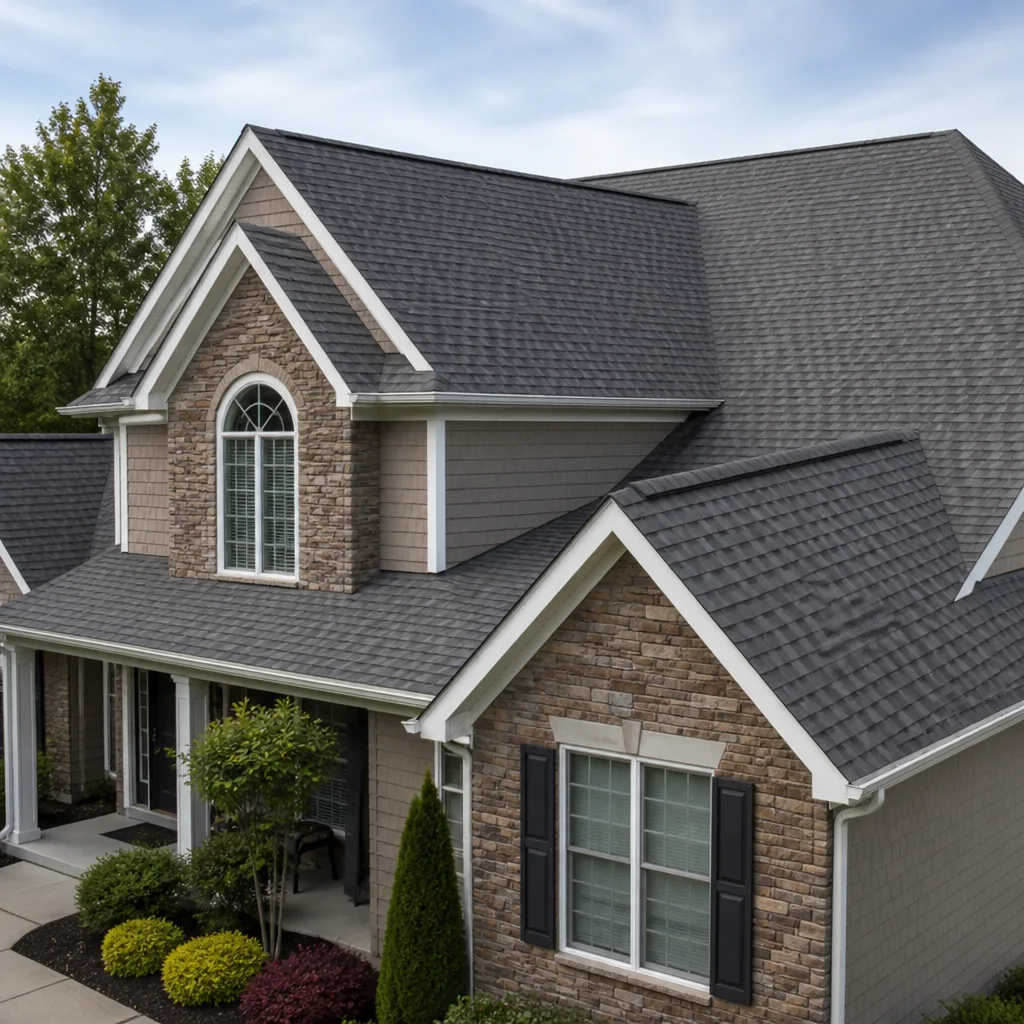
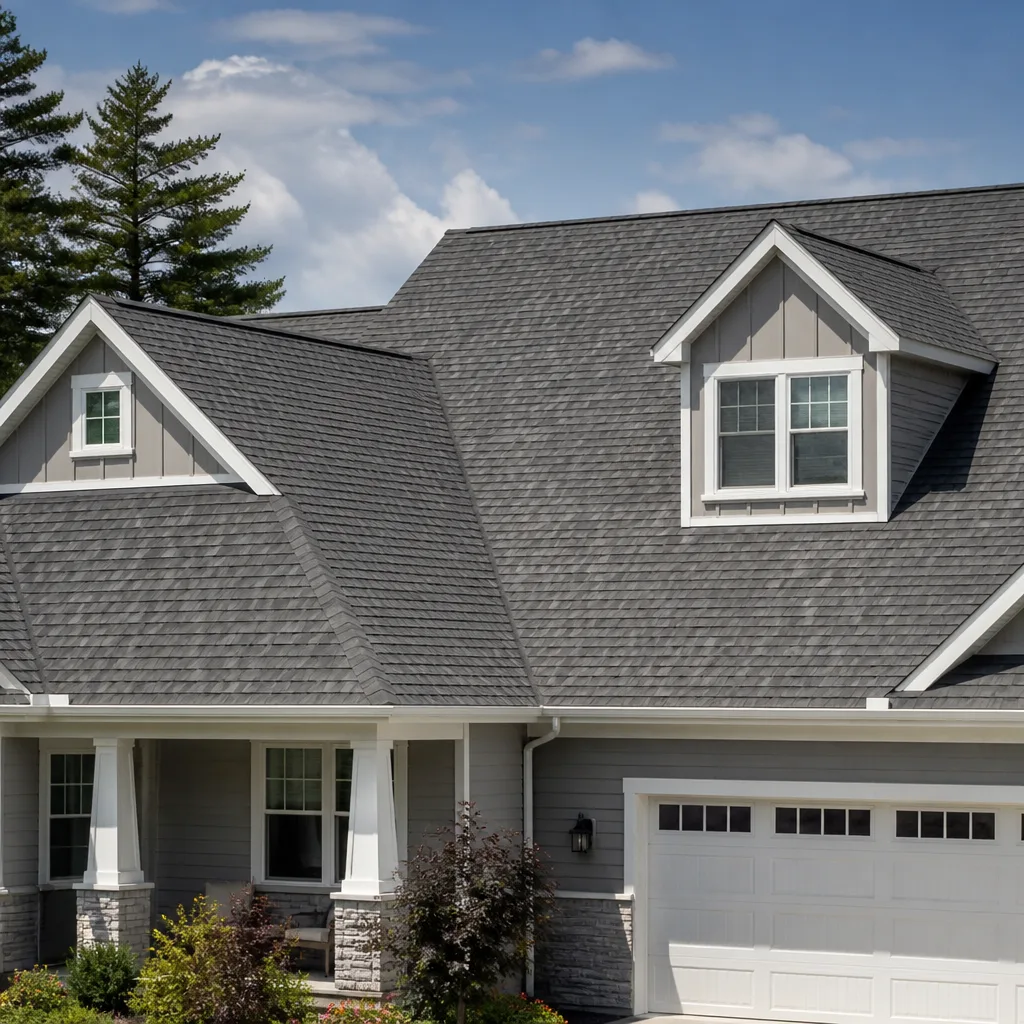 Architectural shingles
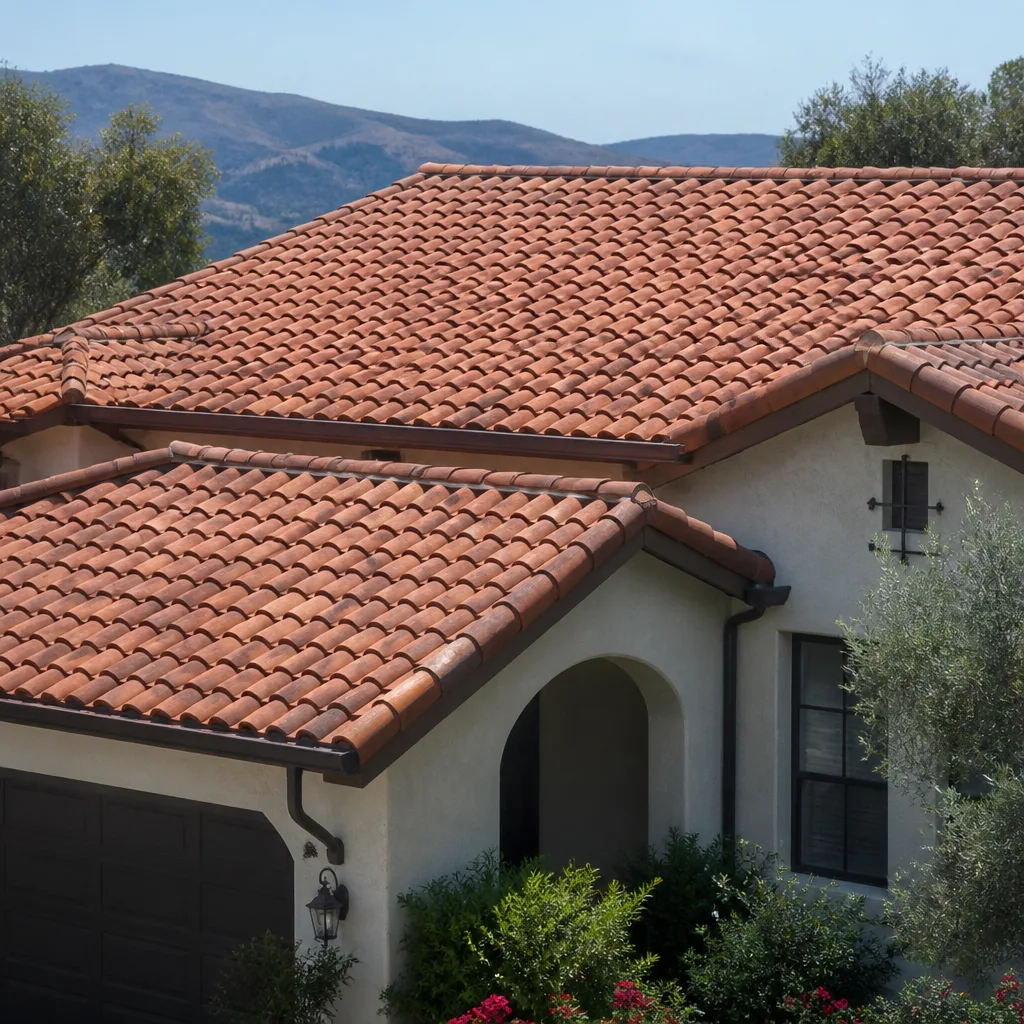 Tile roofing
 GAF
 Owens Corning
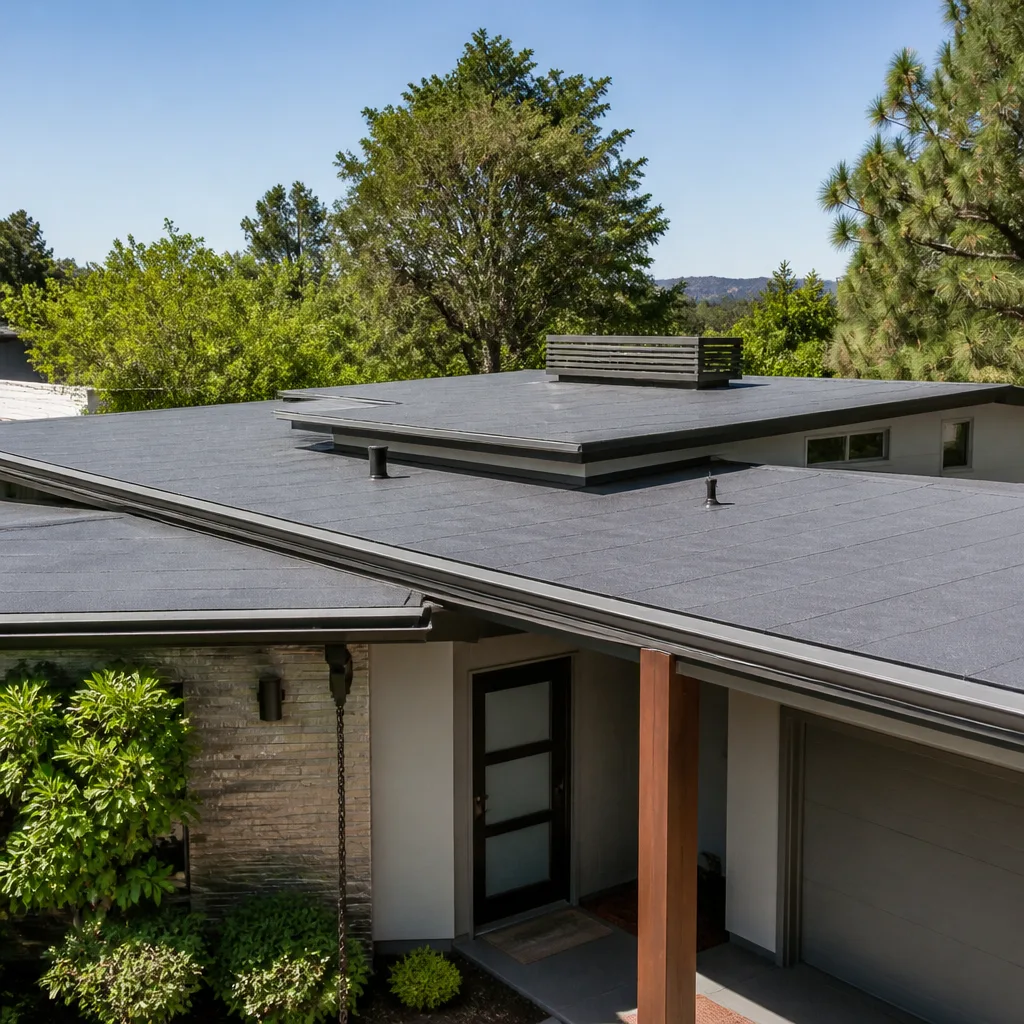 Flat & low-slope
Free roof inspection with deck photos before we talk money - GAF and Owens Corning certified installation
How to Hire a Roofing Contractor in Henderson: A Step-by-Step Guide
The advice you’ve probably heard – get three quotes, check the reviews, don’t pay cash up front – is sound. It’s also not enough in Henderson. This is a market where out-of-state crews arrive after every monsoon season, where the cheapest bid often reflects material substitutions rather than efficiency, and where a contractor with a beautiful website can be impossible to find once the work fails. The problem with “get three quotes” is that it teaches you to compare numbers instead of reading them. This guide teaches you the opposite: how to look behind the number, verify the license, interrogate the material list, and structure a payment schedule that keeps leverage in your hands. Every step below is written for Henderson homeowners who want an honest assessment before they commit money.
Quick Answer
To hire a roofing contractor in Henderson, verify the contractor’s license and classification on the Nevada State Contractors Board website, get a written proposal that names the shingle manufacturer and product line, confirm who pulls the permit, and use a staged payment schedule that withholds final payment until the work passes inspection. Never sign with a contractor who won’t put the material spec, the decking scope, and the permit responsibility in writing. The quote is the contract, and everything vague in it will cost you later.
Styles & brands we work with
- Architectural shingles
- Metal roofing
- Tile roofing
- GAF
- Owens Corning
- Flat & low-slope
Table of Contents
- How do you verify a roofing contractor’s license in Nevada?
- What do Nevada license classifications actually mean for roof work?
- How do you check material sourcing before you sign?
- How do you read a roofing proposal line by line?
- Why is a same-day decision a red flag?
- How should you structure a payment schedule?
- What does Henderson’s climate demand from a roof?
- What questions should you ask before hiring?
How do you verify a roofing contractor’s license in Nevada?
You verify a Nevada roofing contractor by searching the name or license number on the Nevada State Contractors Board website, which returns the license status, classification, expiration date, and any disciplinary record. It takes under two minutes, and it’s the single highest-value two minutes in this entire process. If a contractor can’t produce a license number on request, that’s your answer. Move on.
Here’s the sequence, in order:
- Ask for the license number in writing. A legitimate contractor provides it without hesitation, in the first email or on the proposal header.
- Search it on the NSCB site. Confirm the status reads active, the classification matches roofing work, and the expiration date hasn’t lapsed.
- Check the business name against the license. The company on the proposal should match the name on the license. A different name is a stop sign.
- Look for disciplinary actions. The record shows complaints and resolutions. Read them.
- Confirm the license covers the work being quoted. A handyman license or a general license without the right classification doesn’t cover a roof replacement.
We mention this first because it’s the step homeowners skip when they’re tired and the leak is spreading. In Henderson, where a roofer can be working a storm-damage job one week and gone the next, the license record is the only permanent trail. Get it before you talk price. If a contractor can’t clear this step, nothing in the rest of the proposal matters.
What do Nevada license classifications actually mean for roof work?
Nevada classifies contractors by the type of work they’re licensed to perform, and the classification on the license determines whether the contractor can legally take your roofing job. Roofing typically falls under a specific classification in the state’s licensing framework, and a contractor licensed for a different trade – general building, plumbing, painting – isn’t automatically qualified to tear off and replace your roof. The NSCB site shows the classification clearly. Read it, don’t assume it.
A few practical points Henderson homeowners run into:
- Classification matters more than the company name. A business can be named “Something Roofing” and hold a license that doesn’t cover roofing. The state record is the authority, not the sign on the door.
- A general license isn’t a roofing license. Broad classifications exist, but the specific scope of work is what counts. Ask the contractor to point to the classification that covers the job.
- Subcontracting gets murky. If the company you hire plans to sub out the actual install, you still want to know who’s on your roof, whether they’re licensed, and who carries the liability. Ask the question directly: “Who will physically do this work, and are they licensed?”
- Expired licenses are common after storm season. Check the expiration date, not just the status. A license that lapses mid-project is your problem to untangle.
We’ve watched Henderson homeowners get burned by a contractor whose license was active for the sales call and expired by the install. The record is public and it’s free. Use it, and write the license number onto the proposal before you sign anything.
How do you check material sourcing before you sign?
You check material sourcing by asking the contractor to name the shingle manufacturer and the specific product line in writing – not “architectural shingles” and not “premium shingles,” but the brand and the product family. A contractor who can’t answer that on the spot is either guessing or planning to substitute whatever’s available on the day of the install. Both outcomes cost you.
Why it matters: the roof covering is where most bids get shaved. Two proposals can look identical at the bottom line while one specifies a mid-grade laminate from a major brand and the other quietly substitutes a builder-grade product from a line nobody asked for. The homeowner sees a roof. The difference is real, and it shows up in wind performance, granule loss, and warranty coverage. A contractor fluent in the major brands will tell you which products match your existing system, which ones hold up better under Henderson sun, and which are false economy.
We work with materials from Atlas, Tamko, Boral, and GAF, among others, because being able to match and source across the mainstream shingle market means the recommendation follows the roof’s needs rather than a supplier deal. That’s the difference between a contractor who sells one product and one who can fix any system. When you’re reading proposals, ask these questions:
- Which manufacturer and product line are quoted, by name?
- Does the product match the existing shingles, and will a mismatch void warranty coverage?
- Are the underlayment, valley material, and flashing named, or left generic?
- What’s the warranty on the shingles, and what’s the workmanship warranty from the contractor?
- If a product is out of stock, what’s the substitution policy, and who approves it?
Write the answers into the proposal. A contractor confident in the material list will put it in writing without blinking.
How do you read a roofing proposal line by line?
You read a roofing proposal by looking for four specific things named explicitly: the tear-off scope, the decking inspection and replacement terms, the permit and code compliance responsibility, and the disposal. If any of those four are missing or vague, the proposal is incomplete, and the missing pieces are where change orders come from.
Here’s what a complete proposal spells out:
- Tear-off. How many layers come off, and how the contractor handles a second layer discovered underneath. If the proposal says “remove existing roofing” without a layer count, that’s a hole.
- Decking inspection. A line stating the deck will be inspected after tear-off, and the per-sheet price if damaged sheathing needs replacement. This is the single most common surprise charge in Henderson roofs, and it should be a stated rate, not a surprise.
- Code compliance. Who’s responsible for the permit, and what the proposal says about bringing the roof up to current code. If the scope doesn’t mention permits, ask.
- Flashing and penetrations. Chimney flashing, vent boots, and valley treatment named. These are where leaks start, and they’re routinely glossed over.
- Disposal. The dumpster, the hauling, and whether the cost is included or billed separately.
- Timeline and start date. A real proposal carries a schedule, even a rough one.
- Warranty terms. Both the manufacturer’s warranty and the contractor’s workmanship coverage, in writing.
We tell Henderson homeowners to hold two proposals side by side and compare line by line, not bottom line to bottom line. A bid that’s $2,000 lower because it omits decking replacement and permit responsibility isn’t a lower bid. It’s an incomplete one. The same goes for a proposal that names no product. That’s not a cheaper roof. It’s an unspecified one.
Why is a same-day decision a red flag?
A same-day decision is a red flag because no legitimate roofing project is priced, permitted, and scheduled in an afternoon. Roof replacement involves a permit application, a material order, a crew schedule, and an inspection. A contractor who needs your signature before you’ve had a night to think is running a sales process, not a construction one – and the pressure usually means the number won’t hold once work starts.
What a normal timeline looks like for a Henderson roof, from inspection to final inspection:
- Inspection and diagnosis. The contractor gets on the roof, documents the condition, and talks through repair versus replacement. This takes a visit, not a phone call.
- Written proposal. You get a line-item scope, not a lump-sum verbal quote, and time to review it.
- Permit application. The contractor pulls the permit with the city. This step takes time and it isn’t optional.
- Material order and scheduling. The shingles get ordered, and the crew gets scheduled around weather and the permit.
- Install. A residential tear-off and re-roof takes days, not hours, and depends on the pitch, the size, and what’s found under the old roof.
- Inspection. The city inspects, and any issues get corrected before final sign-off.
Discounts tied to a same-day signature are pressure tactics, full stop. We’ve seen Henderson homeowners accept a “today only” price and then absorb a string of change orders once the crew found the deck was soft. If a contractor can’t give you a written proposal and a week to read it, that’s information. Use it and call someone else.
How should you structure a payment schedule?
A payment schedule protects you when the final payment is held until the work passes inspection. The standard structure is a modest deposit up front, a second payment at material delivery, and the balance at completion, with a final holdback released only after the city inspection passes and you’ve walked the roof. Never pay the full contract price before the work is done and inspected.
A schedule that keeps leverage with you looks like this:
- Deposit. A modest down payment to get on the schedule and order materials. This should be a small fraction of the contract, and it should be tied to a written scope.
- Material delivery. A payment when the shingles and underlayment actually arrive at the property. Not before.
- Substantial completion. A payment when the install is finished and you’ve inspected the cleanup and the flashing details.
- Final payment after inspection. The balance released only after the city inspection passes and any punch-list items are corrected.
Two more rules. Get the schedule in the contract, not in a conversation. And never pay the full amount up front, no matter how good the price sounds – a contractor who needs all the money before starting has a cash-flow problem, and that problem becomes yours. In Henderson, where storm season draws a wave of out-of-town crews, the homeowner who holds the final payment until inspection is the homeowner who gets the punch list fixed.
What does Henderson’s climate demand from a roof?
Henderson’s climate demands a roof that handles intense sun, extreme summer heat, seasonal monsoon wind and rain, and wide temperature swings between day and night. The desert environment is hard on roofing in ways coastal and cold-climate advice doesn’t address. Sun exposure breaks down shingles through heat cycling and granule loss; monsoon storms deliver wind-driven rain that finds every flashing gap; and the daily expansion and contraction of the roof deck stresses fasteners and sealant over time.
What that means when you’re hiring:
- Ask which products the contractor recommends for high-sun, high-heat exposure and why. A product rated for a milder climate may not hold up the same way here.
- Ask about ventilation. Attic ventilation affects shingle life in a hot climate more than most homeowners realize. A proposal that says nothing about ventilation is incomplete.
- Ask about flashing and wind resistance. Monsoon winds expose sloppy flashing. The details matter more than the shingle brand alone.
- Ask how the contractor handles heat on install. Sealant strips and adhesive need the right conditions to bond. A crew working in extreme heat has to know what it’s doing.
We see Henderson roofs fail at the details – valley flashing, vent boots, and the transition at the chimney – more often than at the field of shingles. A contractor who talks climate and detailing knows what they’re looking at. One who only talks price doesn’t.
What questions should you ask before hiring?
You should ask for the license number, the written scope, the named materials, the permit responsibility, the payment schedule, and the workmanship warranty before you sign anything. Those six answers separate a roofing contractor from a sales operation. Here’s the full list, and what a good answer sounds like.
- “What’s your license number, and what classification covers this work?” A good answer is immediate. A bad answer is a story about why they don’t need one.
- “Which manufacturer and product line are you quoting?” A good answer names the brand and the product. A bad answer says “the good stuff.”
- “Who pulls the permit, and what does the proposal say about code compliance?” A good answer is “we do, and it’s in the scope.” A bad answer is “you don’t need one.”
- “What happens if the deck is damaged under the old roof?” A good answer states a per-sheet replacement rate in the proposal. A bad answer says “we’ll see when we get there.”
- “What’s the payment schedule?” A good answer is staged with a final holdback after inspection. A bad answer is all up front.
- “What workmanship warranty do you offer, and what does it cover?” A good answer is in writing. A bad answer is a promise on a handshake.
- “Can I get a standalone inspection before committing to a repair or replacement?” A good answer is yes. An inspection-first contractor will diagnose before recommending scope.
Write the answers down. A contractor who’s confident in the answers won’t mind. If you want the diagnostic step handled first, we offer standalone inspections and free estimates – see our Delmar Roof Repair page for how we work. We inspect before we recommend, and the recommendation follows what the roof actually needs.
Common Mistakes to Avoid
- Comparing bottom lines instead of scopes. A lower bid that omits decking replacement, permit responsibility, or a named product isn’t cheaper – it’s incomplete. Put two proposals side by side and compare the line items.
- Skipping the NSCB check because the contractor seemed honest. Honest is not a license. Search the number, confirm the classification, and read the disciplinary record before you talk price.
- Accepting “architectural shingles” as a material specification. That’s a category, not a product. Ask for the manufacturer and the product line, in writing, on the proposal.
- Signing on a same-day discount. A pressure deadline is a sales process, not a construction one. A legitimate contractor gives you a written proposal and time to read it.
- Paying the full amount up front. The final payment is your leverage. Hold it until the work is done, the cleanup is finished, and the inspection passes.
- Assuming the permit isn’t needed. Most roof replacements in Henderson require a permit and an inspection. A contractor who offers to skip the permit is offering to skip the code compliance that protects you.
- Ignoring the decking question. Soft sheathing under an old roof is the most common surprise charge. A proposal should state a per-sheet replacement rate before work begins, not after.
See the difference
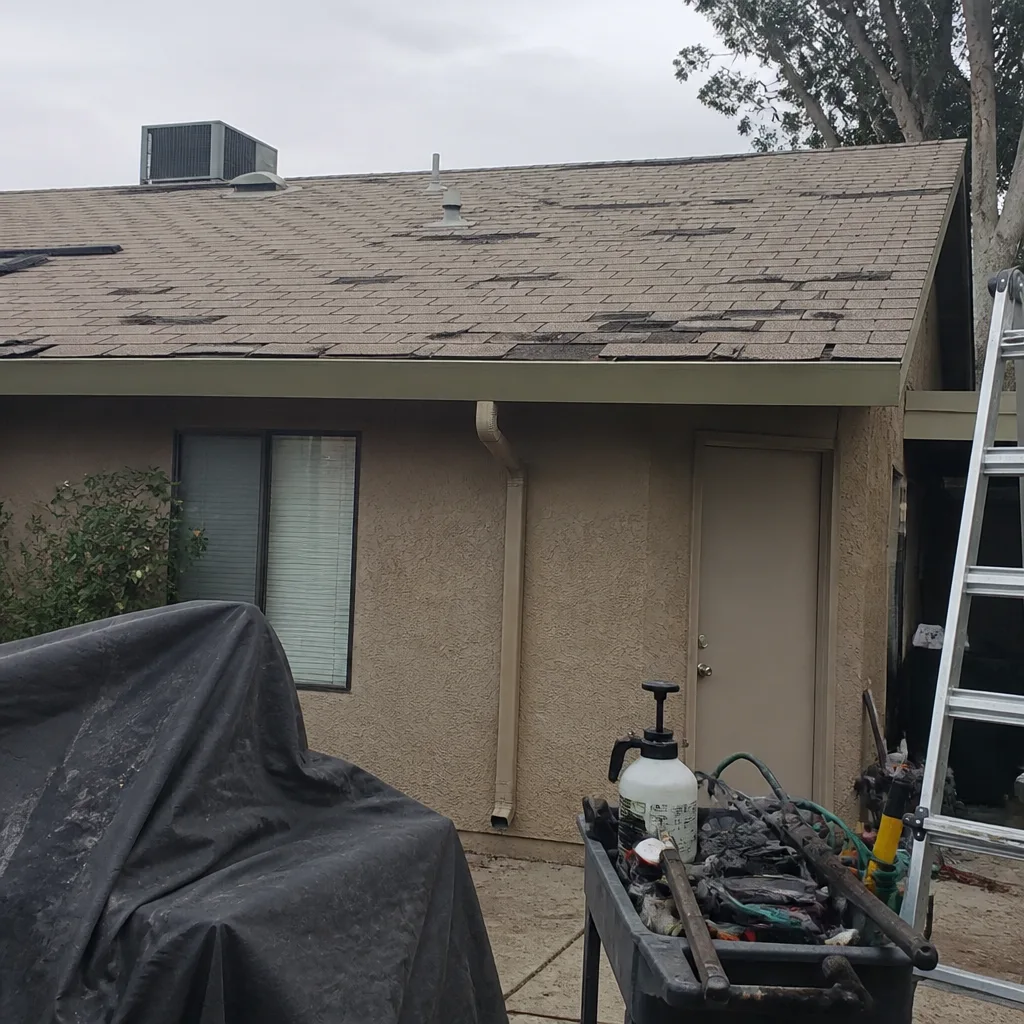 Before
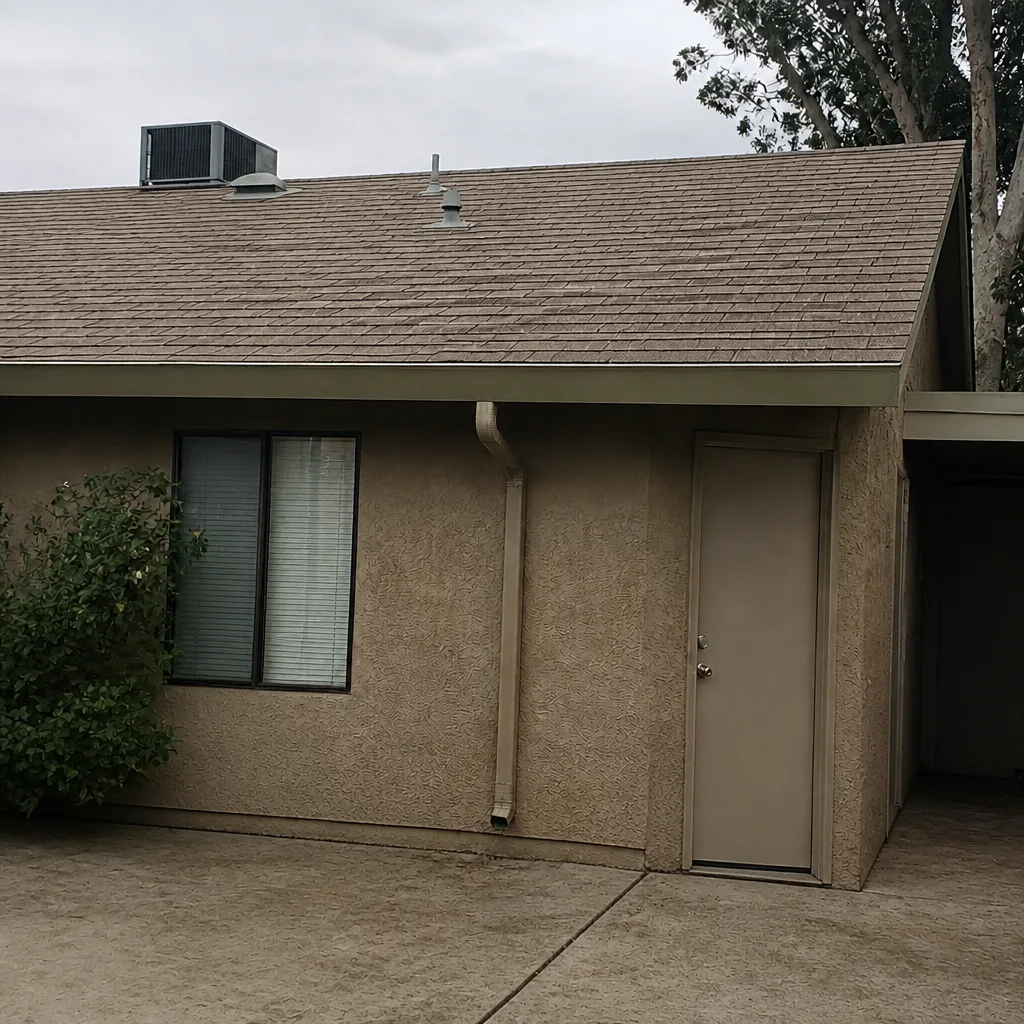 After
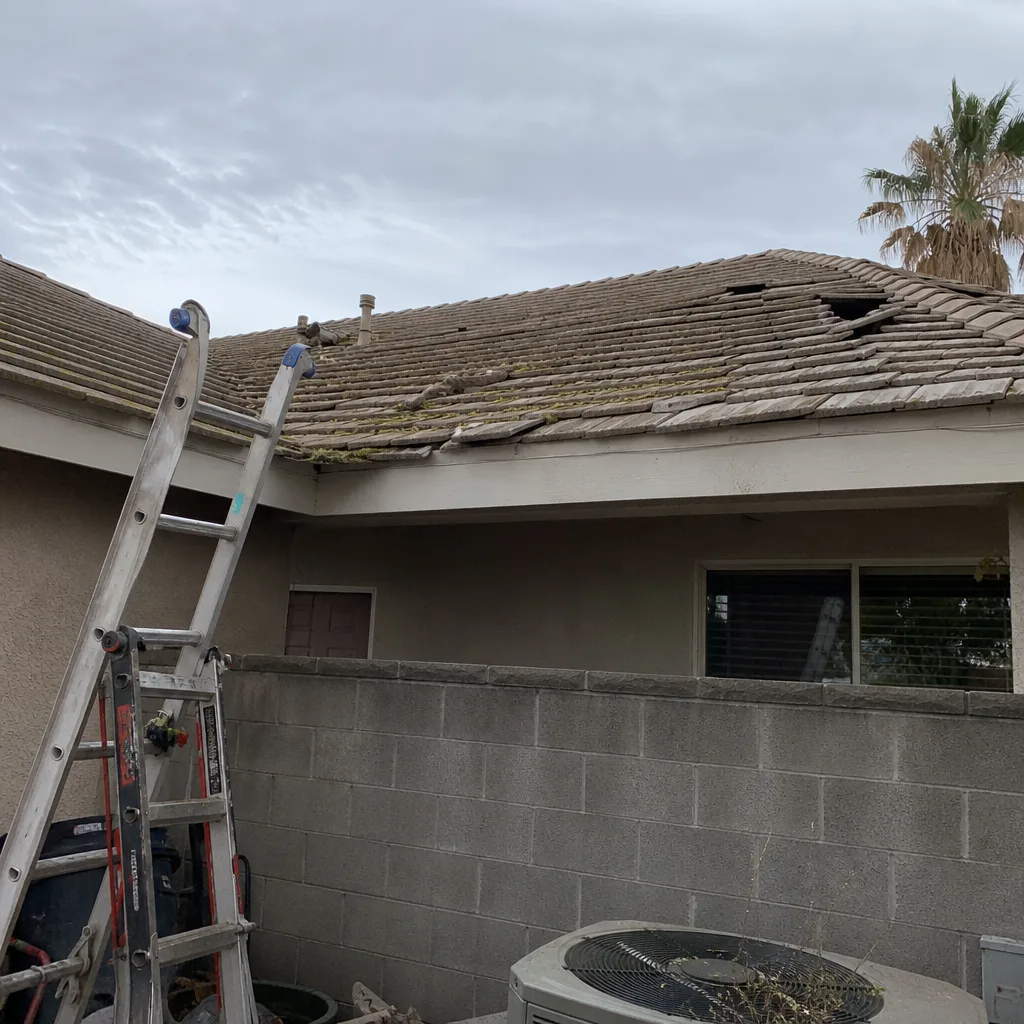 Before
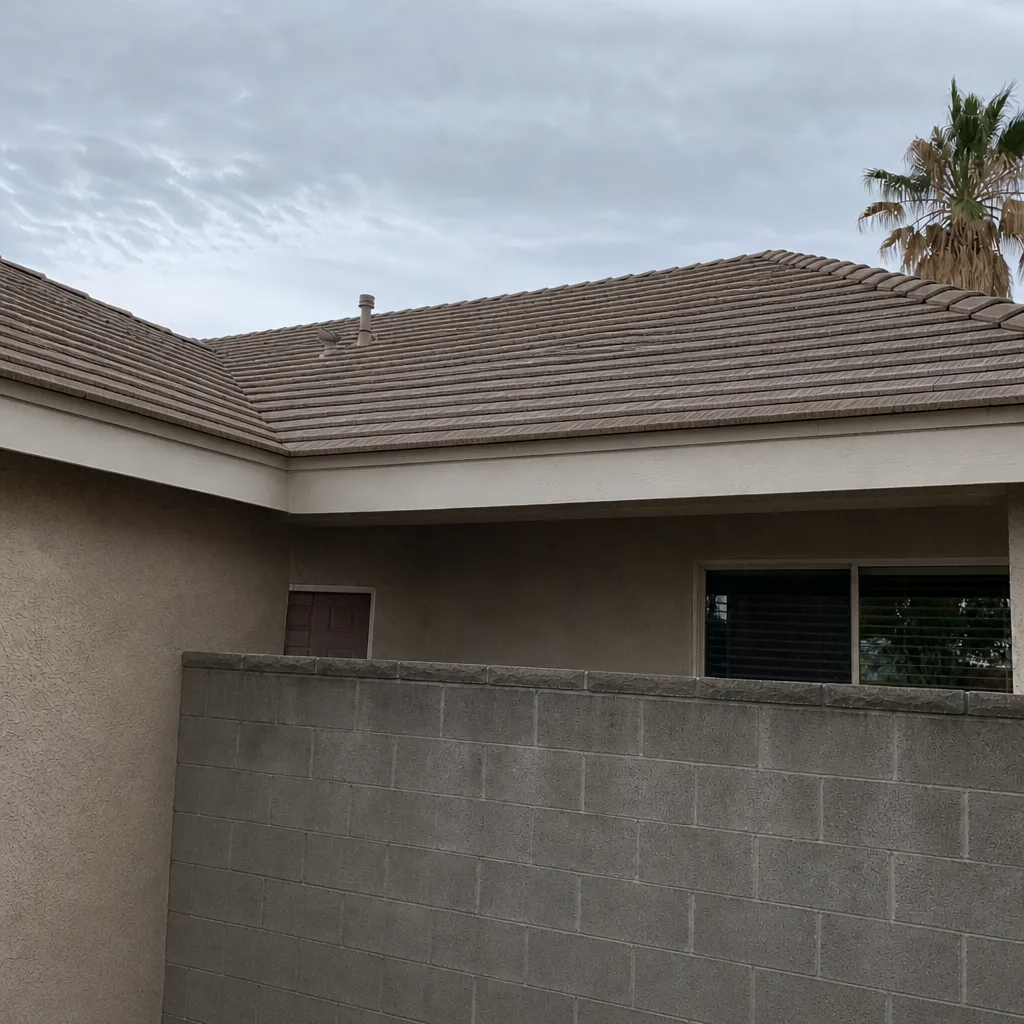 After
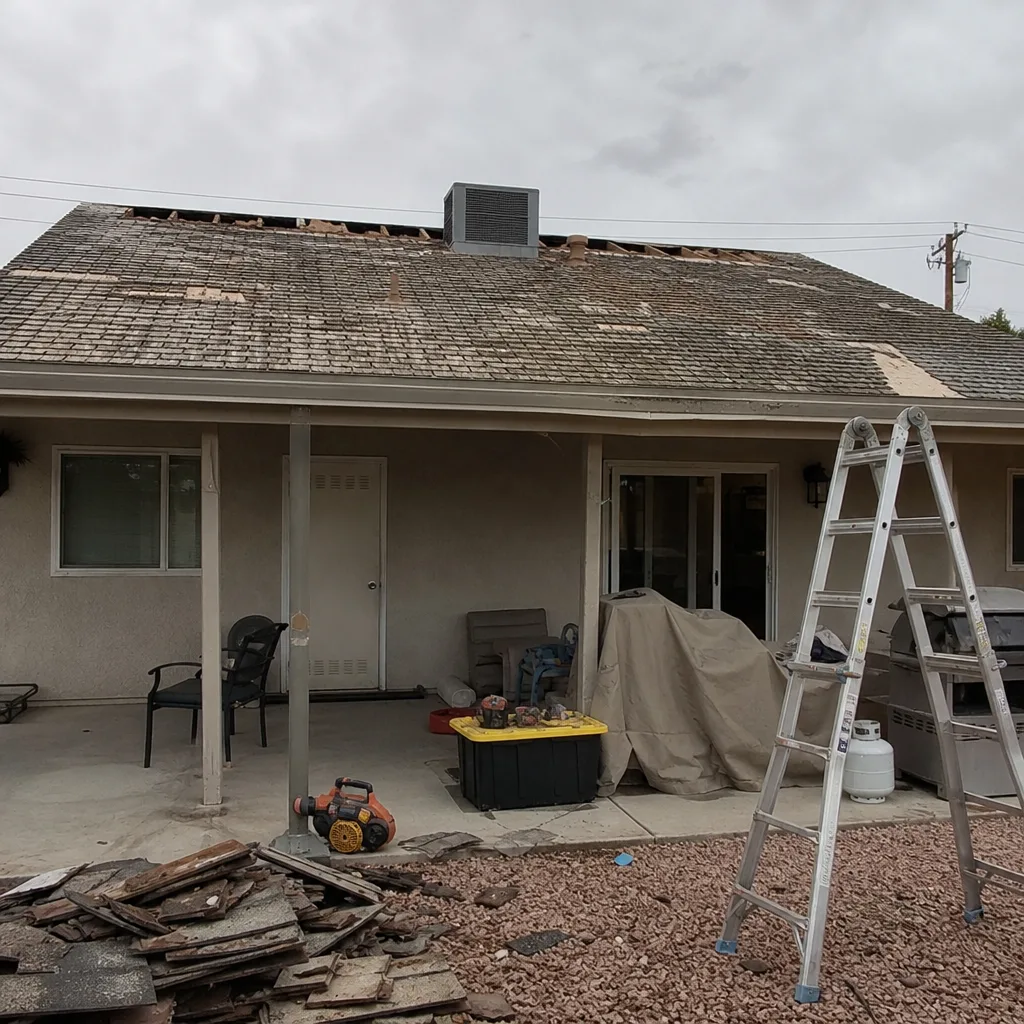 Before
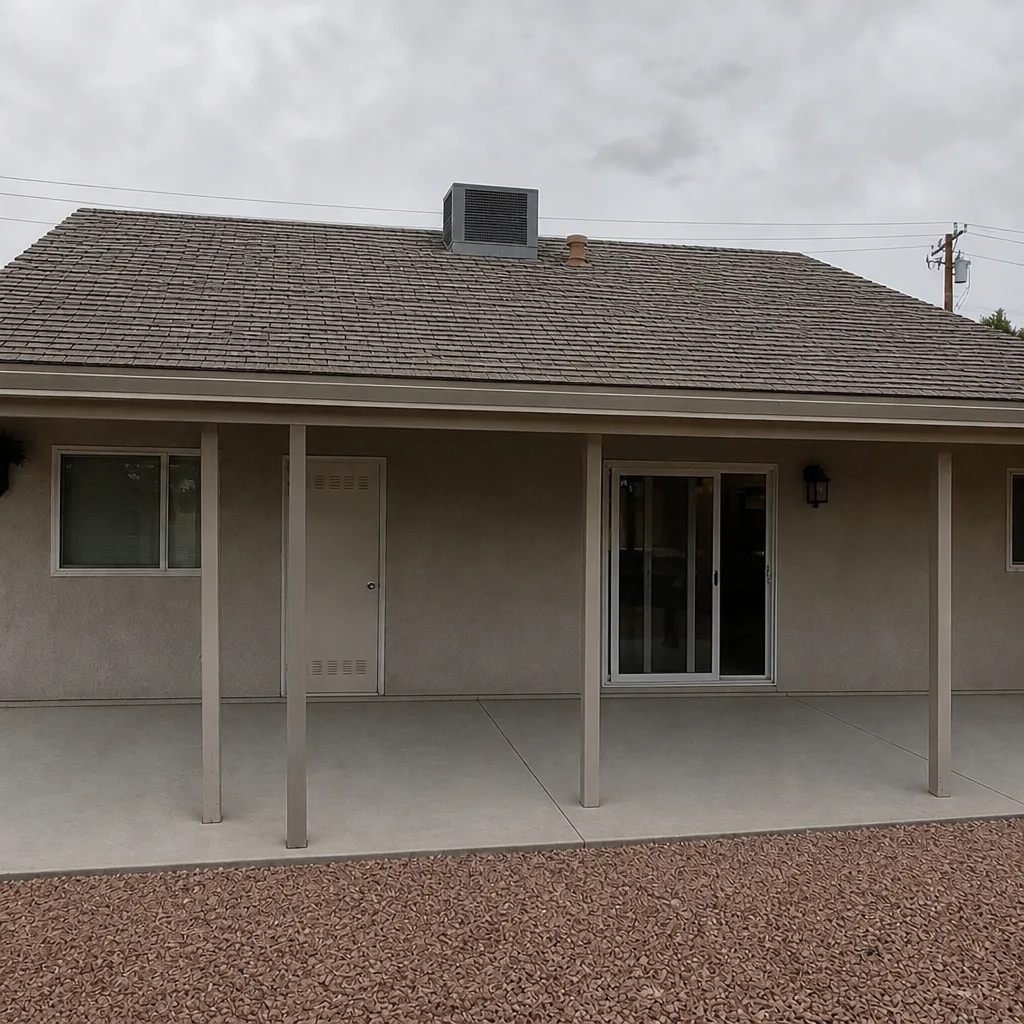 After
When to Call a Professional
Call a professional when you see water staining on a ceiling or an exterior wall, when shingles are missing, cracked, or curling, when granules are collecting in your gutters, or when a monsoon storm has driven rain sideways into a flashing detail. Call when you’re not sure whether the problem is a repair or a replacement – the answer determines the budget, and guessing is expensive. Also call when your roof is past the point where you can safely assess it yourself: getting on a hot roof in Henderson to check for damage is not a homeowner task, and the height and heat make it genuinely dangerous. We inspect before we recommend, and we repair when possible and replace when necessary. Delmar Roof Repair offers free estimates in Henderson – call (833) 519-6453. We answer 24/7. Fast dispatch from 7am to 7pm, Sunday through Friday.
Frequently Asked Questions
Most full roof replacements require a permit and a final inspection through the city, so ask your contractor to confirm the current requirement with the local building department and to put permit responsibility in the written proposal. A legitimate contractor pulls the permit and builds it into the scope. One who offers to skip it is offering to skip the code compliance that protects your investment.
A standalone roof inspection is often free or low-cost when it’s the starting point for any repair or replacement decision, and the written estimate that follows sets the final price for any work. The inspection is the diagnostic step – it tells you whether you have a repair or a replacement ahead of you. Call (833) 519-6453 and we’ll schedule yours.
No – roofing work in Nevada requires a properly classified license, and hiring an unlicensed contractor puts you at risk for failed inspections, voided warranties, and no recourse if the work fails. Verify the license on the Nevada State Contractors Board website before you sign anything. If the contractor can’t produce a license number, that’s your answer.
A roofing quote is too low when it omits decking replacement terms, permit responsibility, or a named shingle product – the savings usually come from scope, not efficiency. Compare line by line against a complete proposal. A bid that’s significantly lower is often a bid that will grow during the project. Get the scope in writing before you decide anything.
A Henderson roofer should be able to name and source from the major shingle manufacturers, including brands like GAF, Atlas, Tamko, and Boral, because the ability to match your existing system matters when a repair needs to preserve warranty coverage and appearance. A contractor fluent across the mainstream market isn’t locked into one supplier. Ask which products they can match to your current roof.
Pay a modest deposit up front, a second payment at material delivery, and hold the balance until the work is complete and the city inspection passes. The exact percentages belong in your written contract. Never pay the full amount before work starts – the final payment is your leverage. Call (833) 519-6453 for a free estimate with a clear payment schedule.
The Bottom Line
Hiring a roofer in Henderson is a verification exercise, not a shopping exercise. The lowest bid isn’t the best value – it’s usually the most incomplete scope. Check the license on the NSCB site and confirm the classification covers roof work. Demand a written proposal that names the shingle manufacturer and product line, spells out the decking and permit terms, and states a per-sheet replacement rate. Treat a same-day discount as a red flag and structure payments so the final holdback follows the inspection. Match any shingle, fix any system, and repair when possible, replace when necessary – the rest is getting the contractor to put it in writing. For an honest assessment before you commit, call Delmar Roof Repair at (833) 519-6453 for a free estimate. We answer 24/7. Fast dispatch from 7am to 7pm, Sunday through Friday. Read more about our roof repair, our roof replacement, and how we work across Henderson.
Written by the team at Delmar Roof Repair.